Paris in One Day: The Perfect Itinerary for First-Time Visitors
Can you really see Paris in one day?
Not all of it, of course. Paris is a city that could fill a week, a month or dozens of return visits. But if you only have 24 hours, you can still experience an extraordinary combination of famous monuments, beautiful neighborhoods, museums, riverside walks and Parisian atmosphere.
The secret is not trying to see everything.
A good one day in Paris itinerary should minimize unnecessary journeys, combine attractions that naturally fit together and leave enough time to actually enjoy the city.
This itinerary does exactly that.
You will start around Notre-Dame and the historic heart of Paris, walk along the Seine, choose how you want to experience the Louvre, cross through the Tuileries Garden, continue towards the Eiffel Tower and finish the day in Montmartre.
It is ambitious, but realistic.
And if you are visiting Paris with children or teenagers, we will also show you where to slow down, what you can skip and how to make the day more interactive.
Here is how to experience Paris in one day without turning your visit into a race.
Paris in One Day: Itinerary at a Glance
Before we start, here is the basic route:
8:00 — Île de la Cité and Notre-Dame
9:00 — Walk along the Seine
10:00 — Louvre Museum or Louvre courtyard
12:30 — Lunch
13:30 — Tuileries Garden and Place de la Concorde
15:00 — Eiffel Tower and Champ de Mars
17:30 — Montmartre
20:00 — Dinner and sunset/evening in Paris
This itinerary is designed primarily for first-time visitors who want to experience several essential sides of Paris in a single day.
You can follow the entire route or adapt it according to your interests.
Museum lover?
Spend longer at the Louvre.
Traveling with teenagers?
Turn part of the museum visit into a challenge.
Already seen the Eiffel Tower?
Use the afternoon to explore a less touristy neighborhood instead.
The itinerary should serve you, not the other way around.
8:00 AM — Start at Notre-Dame and Île de la Cité
Start your one day in Paris early.
Paris changes dramatically as the morning develops, and arriving in the historic center before the busiest hours gives you time to enjoy the surroundings without immediately feeling part of a crowd.
Begin on Île de la Cité, one of the islands in the Seine and the historical heart of Paris.
Notre-Dame is the obvious landmark.
Take time to look at the cathedral from different angles rather than simply photographing the façade and leaving.
Walk around the surrounding streets and towards the Seine.
Look for the details around Notre-Dame
One of the easiest mistakes when visiting Paris quickly is looking only at major monuments.
Instead, use Notre-Dame as your starting point for observing the city.
Look at the bridges.
The façades.
The river.
The booksellers along the Seine.
The towers and rooftops surrounding you.
You have only just started the day, but you are already standing in an area containing centuries of Parisian history.
Optional: Sainte-Chapelle
Sainte-Chapelle is only a short walk away and contains some of the most spectacular stained glass in Paris.
However, with only one day available, adding another interior visit has consequences.
If Sainte-Chapelle is a priority, book ahead and include it.
Otherwise, continue walking.
With a Paris in one day itinerary, every additional attraction means spending less time somewhere else.
9:00 AM — Walk Along the Seine
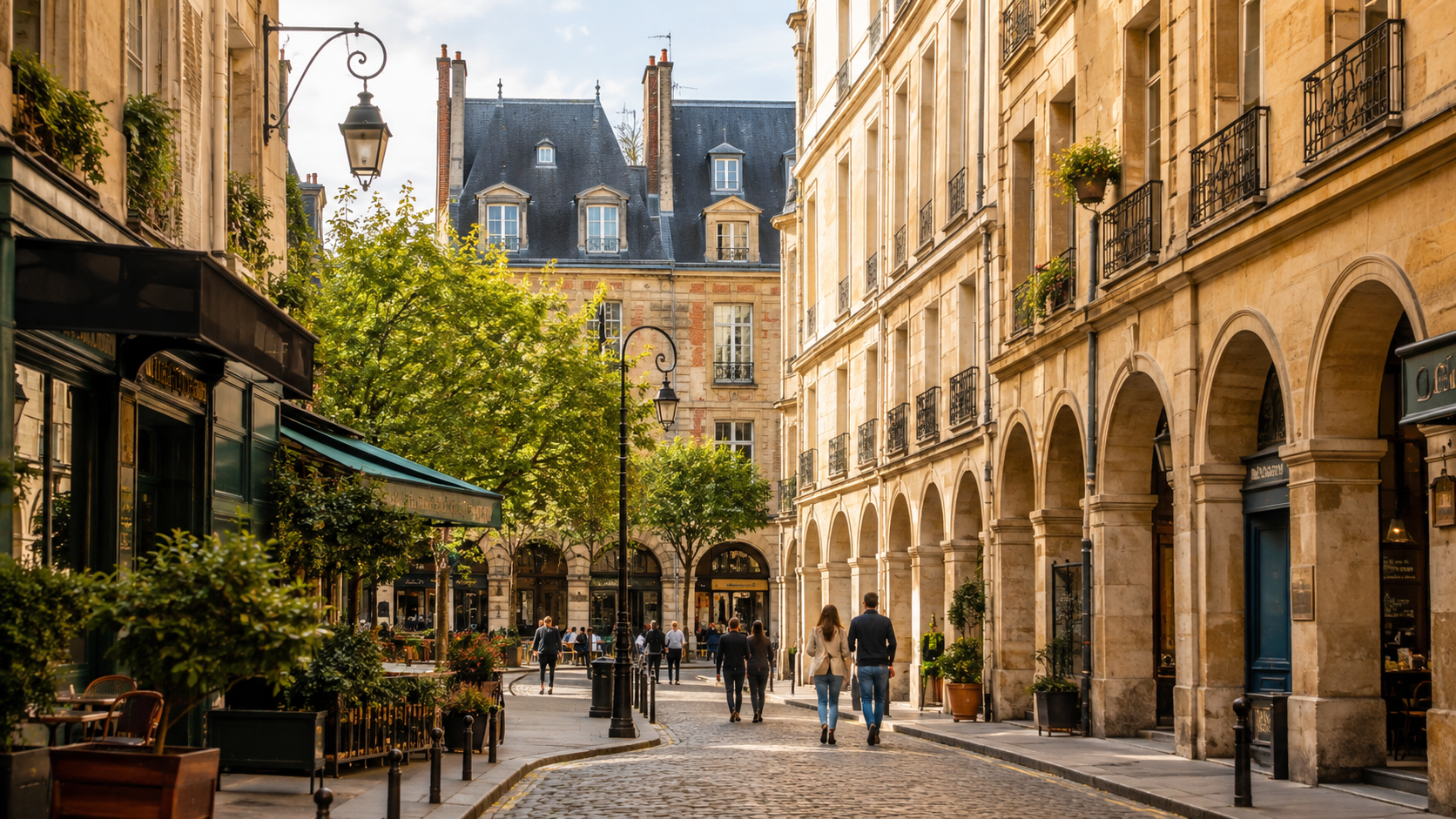
From Île de la Cité, begin moving west along the Seine.
Walking is essential to this itinerary.
The Paris Metro is excellent, but if you travel underground between every landmark, you miss much of what makes the city special.
The Seine connects many of Paris’s greatest monuments, making it a natural route through the center.
If you prefer to explore this part of the city entirely on foot, our self-guided walking tour of Paris follows a route from Notre-Dame through the Louvre and Tuileries towards the Eiffel Tower.
Walk towards the Louvre.
Depending on which bank and route you choose, you can enjoy views of bridges, historic buildings and riverside life along the way.
Do not rush.
This is not dead time between attractions.
The walk is part of visiting Paris.
Bouquinistes and the riverbanks
Along sections of the Seine you will see the famous green boxes of the bouquinistes, traditionally selling books, prints and other items.
They are one of those small Parisian details that can easily become more memorable than another photograph of a monument.
If something catches your attention, stop.
A successful day in Paris needs a little flexibility.
10:00 AM — Visit the Louvre
Eventually you reach one of the most famous museums in the world.
The Louvre presents the biggest planning decision of the day.
Do you go inside?
Option 1: Visit the Louvre
If this is your first visit to Paris and seeing the Mona Lisa or the museum’s collections matters to you, go inside.
But do not attempt to see everything.
The Louvre is enormous.
Trying to cover the entire museum in two hours usually produces exhaustion rather than appreciation.
Choose a limited number of works or sections.
For a one-day itinerary, around two hours inside is a reasonable compromise.
That gives you enough time to experience the museum without allowing it to consume most of your day.
Turn the Louvre into a challenge
Families visiting with children or teenagers can approach the museum differently.
Instead of walking from masterpiece to masterpiece while everyone gradually loses energy, give the visit a purpose.
Look for details.
Search for particular artworks.
Solve clues.
Compare paintings.
Let teenagers navigate part of the museum.
Turning observation into an activity can completely change how younger visitors experience an art museum.
Our Louvre museum game follows exactly this approach, transforming the visit into a self-guided adventure that you complete at your own pace.
There is no guide to follow and no fixed starting time.
That flexibility makes this type of experience particularly useful when you are trying to see Paris in one day.
Option 2: Skip the Louvre interior
There is absolutely nothing wrong with skipping the museum.
If art is not a priority, do not spend several hours inside simply because a guidebook tells you that you should.
Explore the Cour Napoléon and see the glass pyramid.
Walk through the surrounding courtyards.
Then continue towards the Tuileries.
You immediately gain two or three hours that can be used elsewhere.
This can be the better choice for travelers who prefer neighborhoods, architecture and walking.
Turn Your Louvre Visit Into an Adventure
Visiting the Louvre during your one day in Paris? Turn your museum stop into an interactive experience. Follow a story, search for hidden details and solve challenges — at your own pace, with no guide and no fixed schedule.
12:30 PM — Stop for Lunch
Do not turn lunch into another logistical problem.
With only one day in Paris, it is tempting to eat as quickly as possible so you can return to sightseeing.
But sitting down for a while is useful.
Your feet need a break.
So does your attention.
Choose somewhere reasonably close to your route rather than crossing Paris for a restaurant you saw on social media.
A relaxed lunch of around an hour gives everyone a chance to reset before the afternoon.
If you are traveling as a family, this is also a good moment to ask everyone what they have enjoyed most so far.
You may discover that your carefully planned afternoon needs adjusting.
That is fine.
1:30 PM — Walk Through the Tuileries Garden
From the Louvre, continue west into the Tuileries Garden.
This is one of the easiest and most pleasant connections between major Paris landmarks.
Instead of taking transport, you move gradually from the Louvre towards Place de la Concorde through one of the city’s most famous gardens.
The change of pace is welcome after a museum visit.
Sit for a few minutes.
Look back towards the Louvre.
Continue towards the western end of the gardens.
Paris works particularly well when you alternate intensive attractions with open spaces like this.
2:15 PM — Place de la Concorde
At the end of the Tuileries you reach Place de la Concorde.
You do not need to spend long here.
Look at the square, the obelisk and the surrounding architecture.
From this part of Paris, you are connected visually with several of the city’s grandest axes.
The Champs-Élysées stretches west towards the Arc de Triomphe.
But should you walk all of it?
Probably not today.
Do you need the Champs-Élysées?
If you have only one day, I would not dedicate a large part of the afternoon to walking the entire avenue unless it is particularly important to you.
Paris contains more interesting walks.
See the beginning of the avenue from Place de la Concorde, understand where you are, and continue towards the Eiffel Tower.
You can save the Arc de Triomphe for another trip — or include it by sacrificing something else.
This is the recurring principle of a successful Paris in one day itinerary:
choose rather than accumulate.
3:00 PM — Head Towards the Eiffel Tower
Now it is time for Paris’s most recognizable landmark.
Depending on energy levels, weather and your preferred route, you can walk part of the way or use public transport.
If you have already walked throughout the morning, this is a sensible moment to save your legs.
Approaching the Eiffel Tower is part of the experience.
You see it appear between buildings and grow larger as you move closer.
Even travelers who expect the tower to feel overly familiar from photographs are often surprised by its scale in person.
3:30 PM — Eiffel Tower and Champ de Mars
Give yourself time around the Eiffel Tower rather than treating it as a photograph-and-leave stop.
Walk around the area.
Change viewpoints.
Explore the Champ de Mars.
Look back towards the city.
Should you go up the Eiffel Tower?
This depends entirely on your priorities.
Going up the tower is an iconic experience, but it requires time.
Queues, security and the visit itself can occupy a significant part of your afternoon.
If reaching the top of the Eiffel Tower is one of your dreams, book ahead and do it.
Your itinerary should reflect what matters to you.
If your priority is experiencing more of Paris at street level, enjoy the tower from below and continue.
There is no correct answer.
5:00 PM — Time to Change Neighborhoods
By late afternoon, you will have experienced a substantial part of monumental Paris.
Notre-Dame.
The Seine.
The Louvre.
The Tuileries.
The Eiffel Tower.
Now I would change the atmosphere completely.
Head north towards Montmartre.
This is one of the few moments during the day when using the Metro makes obvious sense.
You are moving between two distinct parts of Paris, and walking the entire distance would consume time and energy that are better used exploring your destination.
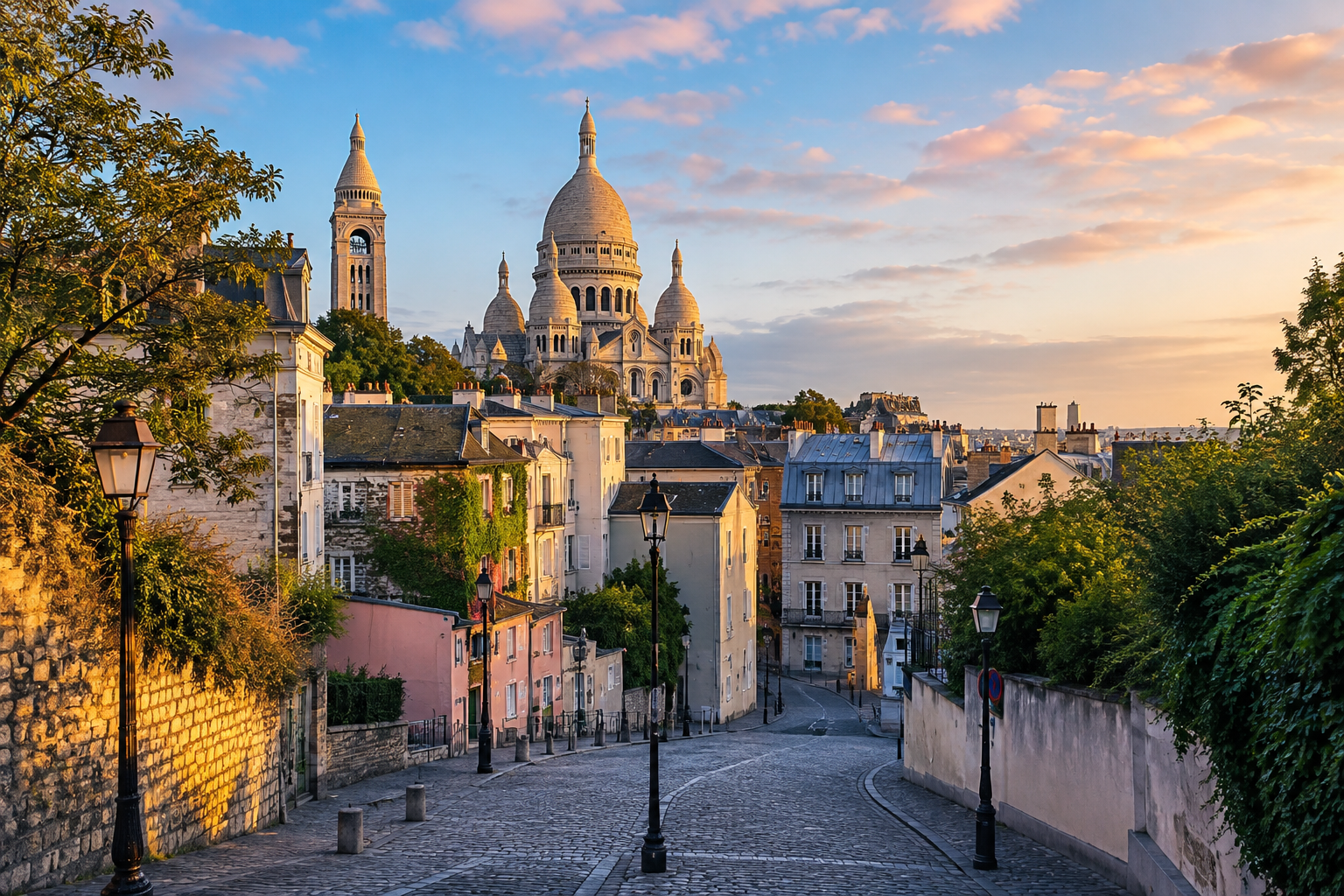
5:30 PM — Explore Montmartre
Montmartre is the ideal place to finish a day in Paris because it feels different from the monumental center.
Its hills, staircases and smaller streets create a different rhythm.
Of course, you should see Sacré-Cœur.
But do not make Sacré-Cœur the entire purpose of visiting Montmartre.
Wander beyond Sacré-Cœur
Walk the surrounding streets.
Look for staircases.
Old façades.
Small squares.
Unexpected views.
Artists and traces of the neighborhood’s creative past.
Parts of Montmartre are extremely touristy, particularly around Place du Tertre.
Move a few streets away and the atmosphere can change quickly.
This is where our guide to Paris off the beaten path becomes useful.
Even one of Paris’s most famous neighborhoods contains quieter corners if you move beyond its most obvious attractions.
Make Montmartre interactive
Montmartre is also an excellent neighborhood for self-guided exploration.
If you want to explore the neighborhood on foot, follow our self-guided Montmartre walking tour, designed to take you beyond the most obvious sights.
Instead of following someone holding an umbrella through the streets, you can use stories, historical details and challenges to give your walk structure while keeping control of your own time.
Search for something.
Follow a story.
Find an unusual building.
Look for traces of an artist.
Notice details other visitors pass without seeing.
This combination of walking and discovery is particularly useful for families with teenagers.
You are no longer simply walking because the adults want to see another neighborhood.
There is something to do along the way.
7:30 PM — Dinner in Montmartre or Nearby
By now, you have earned dinner.
Do not schedule another major attraction immediately.
Find somewhere to eat and allow the pace of the day to slow.
You have covered a remarkable amount of Paris.
This is also the point where a rigid itinerary should end.
Maybe everyone still has energy.
Maybe nobody does.
Both are acceptable.
9:00 PM — Paris After Dark
If you still want more, Paris becomes another city after sunset.
You have several options.
Stay around Montmartre and enjoy the evening atmosphere.
Return towards the Seine.
See the Eiffel Tower illuminated.
Walk through a neighborhood you discovered earlier.
Or simply sit somewhere with a drink and watch the city.
You do not have to fill every minute.
After twelve hours of exploring, sometimes the best final Paris experience is simply being in Paris.
One Day in Paris With Kids
The itinerary above works for families, but I would make a few adjustments when visiting Paris with kids.
The biggest mistake is assuming children have the same sightseeing endurance as adults.
They usually do not.
And even if they can physically continue walking, that does not mean they are enjoying the day.
Reduce the number of compulsory stops
Choose three major experiences rather than six.
For example:
Notre-Dame and the Seine.
The Louvre.
Eiffel Tower.
Everything else becomes optional.
If the family is still enthusiastic, continue.
If not, stop for ice cream, find a park or simply explore without an objective.
Make observation part of the day
Give children things to find.
A gargoyle.
A red Metro sign.
A painting containing an animal.
A strange statue.
The Eiffel Tower appearing between buildings.
A street musician.
A boat on the Seine.
You have created a Paris scavenger hunt without needing any special equipment.
One Day in Paris With Teenagers
Teenagers are different.
They can usually manage the walking, but endless passive sightseeing can become tedious.
Give them some control.
Let them navigate.
Ask them to choose where you eat.
Turn the Louvre into a game.
Search for street art.
Let them photograph the day from their perspective.
Our guide to things to do in Paris with teenagers explores this approach in much more detail.
Paris becomes far more engaging when teenagers participate in discovering it instead of simply following the adults.
What If You Don’t Want to Visit the Louvre?
Easy.
Remove it.
Your morning could become:
Notre-Dame → Latin Quarter → Seine → Tuileries.
Or use those extra hours to explore somewhere completely different.
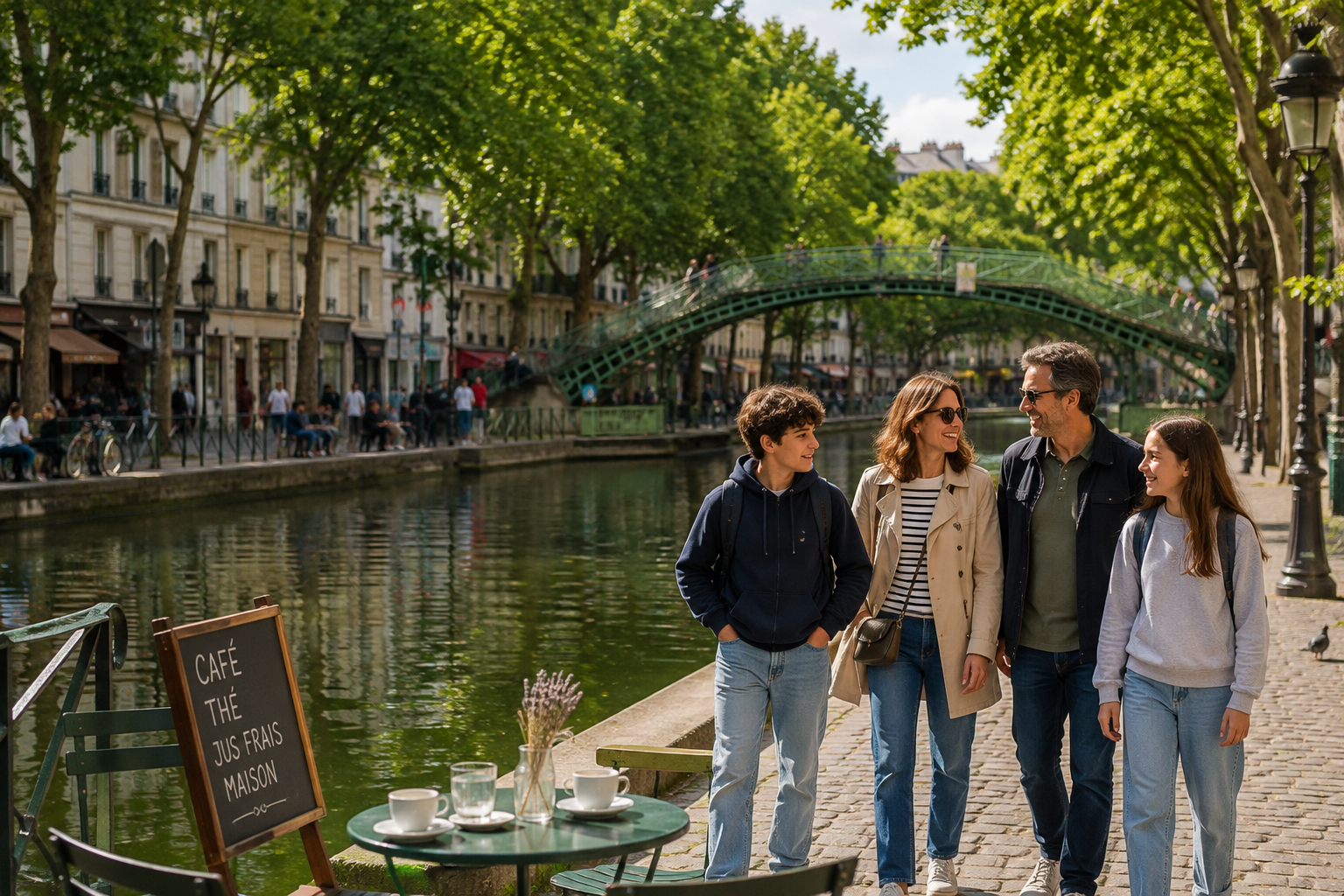
Canal Saint-Martin.
Le Marais.
Belleville.
The covered passages.
A longer Montmartre walk.
Our guide to unusual things to do in Paris contains plenty of alternatives if the standard itinerary does not appeal to you.
A one-day itinerary should not become a list of obligations.
What If It Rains?
Paris does not stop when it rains.
But your priorities may change.
Spend longer inside the Louvre.
Explore the covered passages.
Visit another museum.
Stop at cafés more frequently.
Reduce long outdoor walks.
If you are traveling with a family, keeping everyone reasonably dry and comfortable is more important than completing an itinerary exactly as written.
Do not fight the weather.
Adapt to it.
Is a Hop-On Hop-Off Bus Worth It With Only One Day?
It can be.
For travelers with limited mobility, younger children or little desire to walk long distances, a sightseeing bus can connect major attractions efficiently while still allowing you to see the city above ground.
But if you are comfortable walking, I prefer combining walking with occasional Metro journeys.
Paris rewards pedestrians.
You notice far more.
And many of the most memorable moments happen between the famous places.
Can You Do Paris in One Day From London?
Yes, but this creates a much tighter schedule.
High-speed trains make a London-to-Paris day trip possible, but you need to account for station arrival times, security procedures and your return journey.
If you are arriving at Gare du Nord in the morning, do not attempt every stop in this itinerary.
Choose priorities.
For example:
Morning: Notre-Dame and Seine.
Late morning/early afternoon: Louvre.
Afternoon: Eiffel Tower.
Early evening: Montmartre if time allows.
Then return to Gare du Nord with a generous safety margin.
Missing one attraction is disappointing.
Missing your international train is considerably worse.
How Much Walking Is This Paris One-Day Itinerary?
Quite a lot.
Even using the Metro for the longer transfers, expect a full day on your feet.
Comfortable shoes matter more than fashionable ones.
Do not underestimate distances inside museums either.
A two-hour Louvre visit can add substantial walking before you even return to the streets.
If someone in your group struggles with long distances, reduce the itinerary.
Paris will still be there next time.
Should You Buy Tickets in Advance?
For major attractions, advance planning can save valuable time.
This is especially important when your entire visit lasts only one day.
Check official websites for current opening times, ticket requirements and possible closures before your visit.
If you plan to enter the Louvre or climb the Eiffel Tower, reserving an appropriate time slot can give your itinerary much more structure.
But avoid booking every hour.
Too many reservations turn a holiday into an appointment schedule.
One or two fixed visits are enough.
How to Make the Most of Paris in One Day
The difference between a memorable day and an exhausting one often comes down to a few simple decisions.
Start early
The first hours of the morning are valuable.
Use them.
Walk between nearby attractions
Do not automatically take the Metro.
Paris itself is what you came to see.
Use transport for long jumps
Eiffel Tower to Montmartre?
Take the Metro.
Save your walking energy for the neighborhoods themselves.
Do not queue for things you do not care about
Your time is limited.
Use it according to your interests.
Eat
This sounds obvious.
It stops being obvious when people try to fit ten attractions into eight hours.
Leave room for discovery
If an interesting street appears, walk down it.
If everyone loves somewhere, stay longer.
If an attraction disappoints you, leave.
The perfect itinerary is not the one you complete exactly.
It is the one that produces the best day.
Paris in One Day or Two Days?
If you can stay two days, do it.
The second day changes everything.
You can dedicate more time to neighborhoods.
Visit another museum.
Explore Montmartre without watching the clock.
Spend time in Le Marais.
Walk along Canal Saint-Martin.
Discover some of the places from our Paris off the beaten path guide.
With one day, you experience the highlights.
With two days, you begin to experience the city.
But if one day is all you have, do not think of it as an inadequate trip.
Think of it as an introduction.
Paris is very good at making people want to return.
The Best Route for Paris in One Day
If I had to reduce this entire guide to one route for a first-time visitor, it would be:
Notre-Dame → Seine → Louvre → Tuileries → Eiffel Tower → Montmartre.
It works because it combines different versions of Paris.
Medieval Paris.
Riverside Paris.
Artistic Paris.
Monumental Paris.
Neighborhood Paris.
You experience famous sights without spending the entire day traveling between disconnected locations.
More importantly, you spend substantial parts of the day walking through the city.
That is essential.
Because Paris is not simply a collection of attractions.
The streets between them are part of the experience.
Turn Your One Day in Paris Into an Adventure
When you only have one day, every experience needs to earn its place in the itinerary.
That does not mean rushing.
It means making the places you choose more engaging.
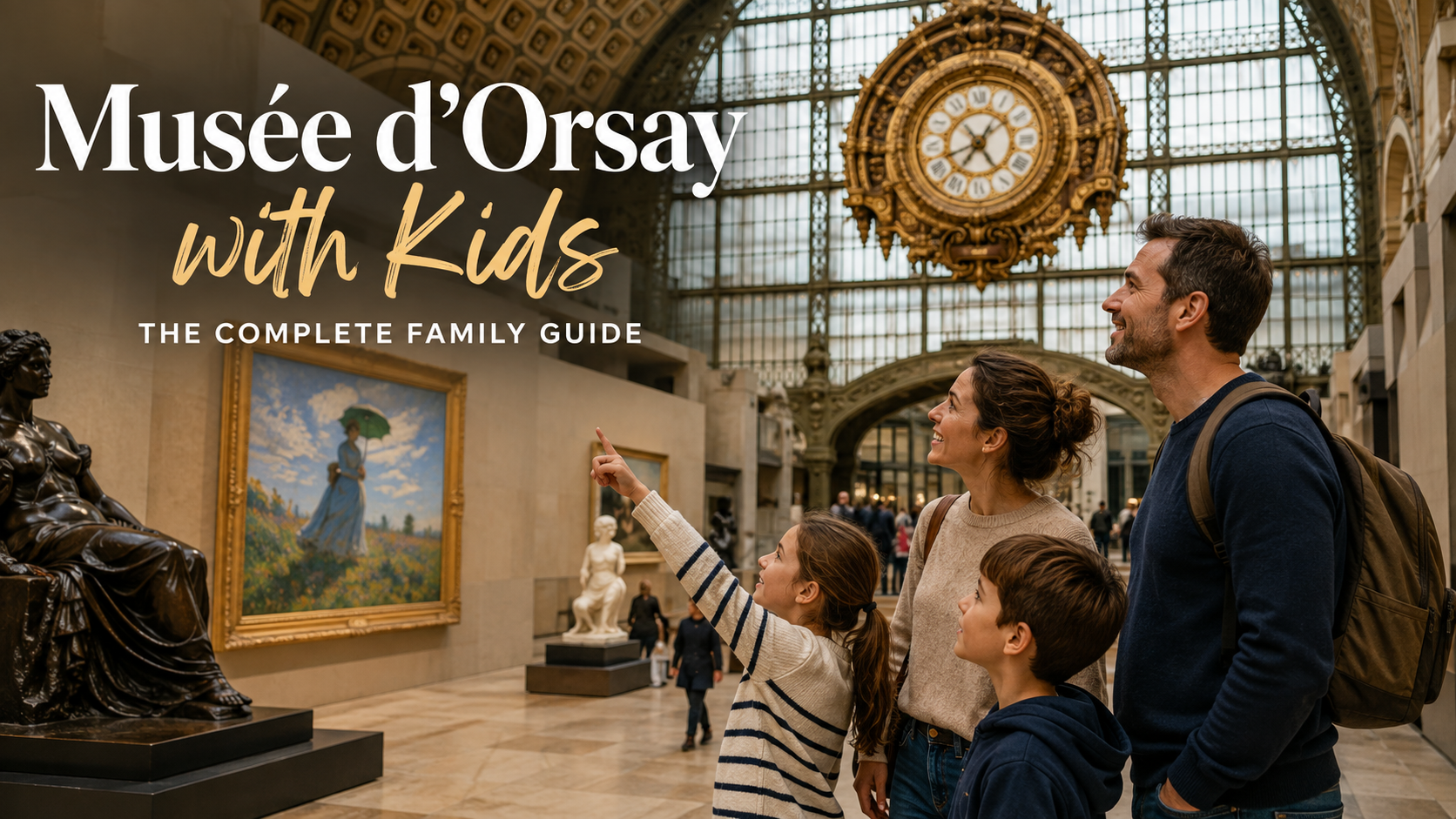
If the Louvre or Musée d’Orsay is part of your day, you can explore the museum while following a story, observing artworks and solving challenges along the way.
No group.
No fixed schedule.
No need to replace the museum with your phone.
Just another reason to look more closely.
Turn Your Paris Museum Visit Into an Adventure
Visiting the Louvre or Musée d’Orsay? Explore the masterpieces in a different way. Follow the story, look for hidden details and solve challenges as you make your way through the museum — at your own pace, with no guide and no fixed schedule.