Blog

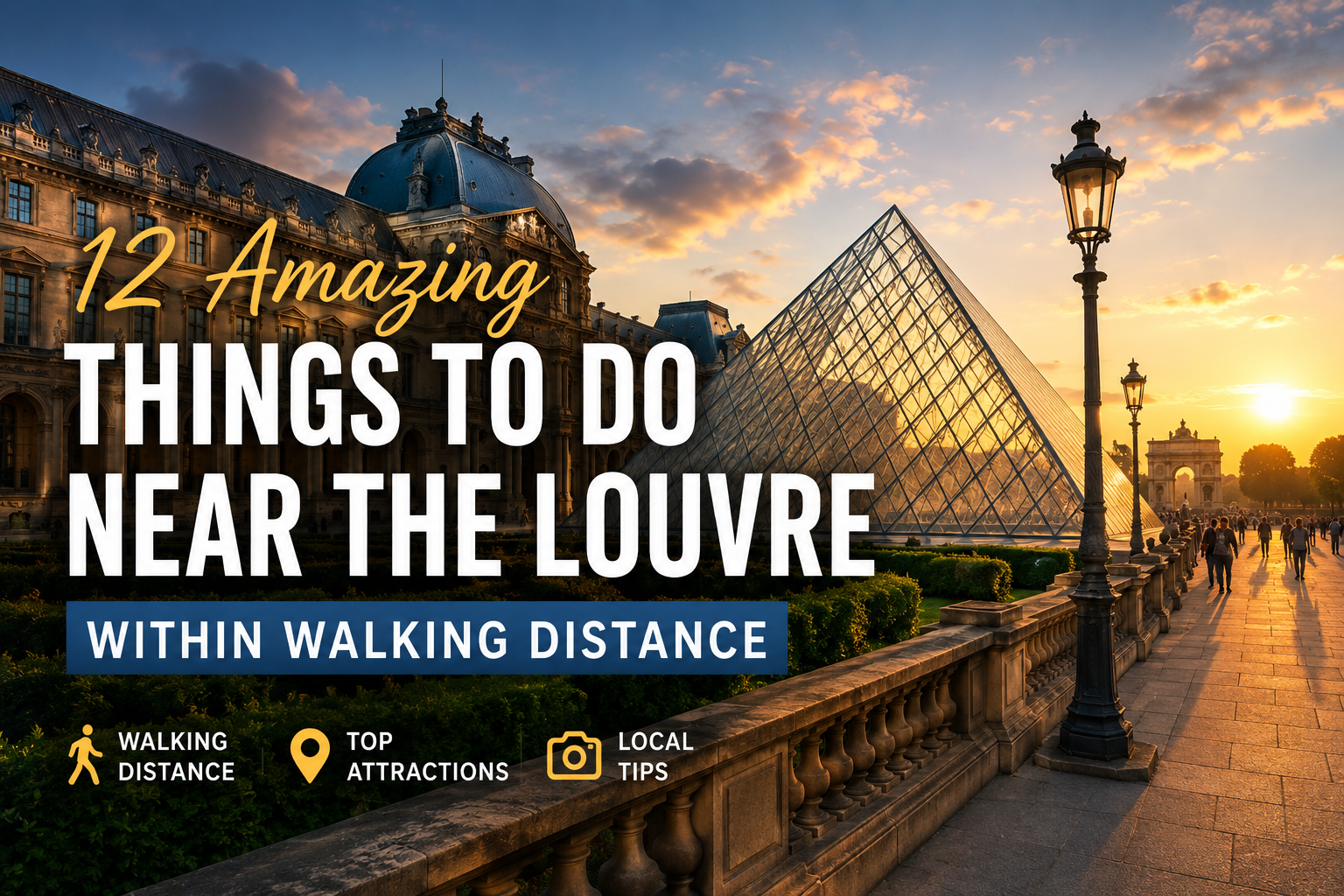
  • Things to Do Near the Louvre: 12 Amazing Places Within Walking Distance

    Things to Do Near the Louvre: 12 Amazing Places Within Walking Distance

    Things to Do Near the Louvre: 12 Amazing Places Within Walking Distance

    If you’re visiting the Louvre, don’t make the mistake of leaving as soon as you’ve seen the Mona Lisa. The museum sits in the very heart of Paris, surrounded by beautiful gardens, historic landmarks, charming streets, and some of the city’s most iconic views.

    Whether you have a few hours after your museum visit or you’re planning an entire day in central Paris, there are plenty of attractions within a short walk of the Louvre.

    In this guide you’ll discover the best things to do near the Louvre, including hidden gems, scenic walks, family-friendly stops, and one unique experience that turns your museum visit into an unforgettable adventure.

    If you’re wondering about the best things to do near the Louvre, this guide covers the top attractions within walking distance.


    Things to Do Near the Louvre: Why Explore the Area?

    The Louvre is much more than a museum. It sits between the Seine River, the Tuileries Garden, Palais Royal and several of Paris’ most famous monuments.

    The entire neighborhood is remarkably walkable, allowing you to experience royal history, elegant architecture, beautiful gardens and world-famous museums without using public transport.

    Most attractions on this list are less than 15 minutes away on foot.


    1. Turn Your Louvre Visit into an Escape Adventure

    Most visitors walk through the museum trying to see as many masterpieces as possible.

    A different approach is to explore the Louvre while solving puzzles inspired by its artworks and history.

    Our Escape Game at the Louvre transforms your visit into a self-guided adventure. Instead of simply following the crowds, you’ll search for clues hidden in famous paintings, sculptures and architectural details while uncovering a fictional mystery that unfolds as you move through the museum.

    It’s designed for couples, families and groups looking for a more engaging way to discover one of the world’s greatest museums.

    Perfect if you’re travelling with teenagers or children who normally lose interest during long museum visits.


    2. Relax in the Tuileries Garden

    Only a couple of minutes from the Louvre, the Jardin des Tuileries is one of Paris’ most beautiful parks.

    Designed by André Le Nôtre in the 17th century, it offers:

    • Beautiful tree-lined avenues
    • Sculptures by famous artists
    • Fountains
    • Green chairs perfect for relaxing
    • Seasonal funfair attractions

    It’s the ideal place to take a break after spending several hours inside the museum.


    3. Explore Palais Royal

    Many tourists walk straight past Palais Royal without realizing what they’re missing.

    Behind its elegant arcades you’ll find:

    • Peaceful gardens
    • Historic galleries
    • Designer boutiques
    • The famous black-and-white Colonnes de Buren installation

    It’s one of the quietest places in central Paris despite being only a few minutes from the Louvre.


    4. Walk Across Pont des Arts

    Pont des Arts is one of the most picturesque bridges in Paris.

    Although the famous love locks have disappeared, the bridge still offers wonderful views of:

    • The Seine
    • The Louvre
    • Institut de France
    • Sunset over central Paris

    It’s a perfect stop for photography lovers.


    5. Visit Musée d’Orsay

    If you enjoy art, don’t stop after the Louvre.

    Within a pleasant 15-minute walk you’ll reach Musée d’Orsay, home to the world’s greatest collection of Impressionist masterpieces.

    Here you’ll discover works by:

    • Monet
    • Van Gogh
    • Renoir
    • Degas
    • Cézanne

    If you’re visiting with children, our guide to visiting the museum with kids can help you plan a more enjoyable experience.


    6. Walk Along the Seine

    The riverbanks around the Louvre are among the most beautiful in Paris.

    Take time to enjoy:

    • Historic bridges
    • Street musicians
    • Riverside cafés
    • Bookstalls
    • Views of Notre-Dame in the distance

    The atmosphere changes completely throughout the day, making it worth visiting both in the morning and at sunset.


    7. Visit Sainte-Chapelle

    Around 15 minutes away on foot stands one of Paris’ greatest hidden treasures.

    Sainte-Chapelle is famous for its breathtaking stained-glass windows, which cover almost every wall of the upper chapel.

    On sunny days, the light inside creates one of the most spectacular interiors in Europe.


    8. Discover Place Vendôme

    Luxury lovers shouldn’t miss Place Vendôme.

    This elegant square is surrounded by some of the world’s most prestigious jewellery houses, luxury hotels and fashion boutiques.

    Even if shopping isn’t on your itinerary, the architecture alone makes it worth the short detour.


    9. Browse the Rue de Rivoli

    Running alongside the Louvre, Rue de Rivoli offers plenty of shopping opportunities.

    You’ll find:

    • French brands
    • International fashion stores
    • Cafés
    • Bakeries
    • Souvenir shops

    It’s an easy place to continue your walk while enjoying the lively atmosphere.


    10. Visit the Orangerie Museum

    At the western end of the Tuileries Garden sits the Musée de l’Orangerie.

    Its highlight is Monet’s magnificent Water Lilies, displayed in specially designed oval rooms that create an immersive viewing experience.

    It’s much smaller than the Louvre, making it an excellent option if you don’t have time for another large museum.

    Check the museum’s opening hours and ticket information before your visit.


    11. Enjoy a Coffee at Café Marly

    If you’re looking for a memorable coffee break, Café Marly offers one of the best terraces in Paris.

    Overlooking the Louvre Pyramid, it’s an ideal place to relax while watching visitors come and go.

    Although prices are higher than average, many people consider the view worth it.


    12. End the Day with Sunset by the Seine

    One of the simplest pleasures near the Louvre is finding a quiet spot beside the Seine as the city lights begin to appear.

    Watching boats glide along the river while the monuments slowly illuminate is a perfect way to end a day exploring central Paris.


    Suggested Half-Day Itinerary

    If you only have half a day after visiting the Louvre, here’s a simple route:

    1. Explore the Louvre.
    2. Play the Escape Game.
    3. Walk through the Tuileries Garden.
    4. Visit Palais Royal.
    5. Cross Pont des Arts.
    6. Finish with a drink overlooking the Seine.

    This itinerary covers many of Paris’ highlights without feeling rushed.

    If you’re planning to spend one day in Paris, you can easily include this route in a larger itinerary.


    Frequently Asked Questions

    Can you walk everywhere near the Louvre?

    Yes. Most of the attractions listed above are within a 5 to 15-minute walk of the museum.

    Is the area around the Louvre safe?

    Yes. It’s one of the busiest tourist areas in Paris. As everywhere in the city, remain aware of pickpockets in crowded places.

    How much time should I spend around the Louvre?

    A full day is ideal if you want to visit the museum and explore the surrounding neighborhood. Even half a day is enough to enjoy several nearby attractions.

    What’s the best attraction near the Louvre for families?

    The Tuileries Garden is a favorite with families, and combining your visit with an interactive museum experience such as our Escape Game makes the day much more engaging for children and teenagers.

    For more ideas, see our guide to the best museums in Paris for families.

    You may also enjoy our list of the best things to do in Paris with kids.


    Final Thoughts

    The Louvre may be the main attraction, but it’s only the beginning of what this part of Paris has to offer.

    From elegant gardens and hidden courtyards to world-famous museums and riverside walks, the neighborhood rewards visitors who slow down and explore beyond the museum walls.

    Whether you’re planning your first trip to Paris or returning to discover more, these attractions will help you make the most of your time around the Louvre. If you’re looking for even more unique places to explore, don’t miss our guide to Paris off the beaten path.

  • Title: 3 Days in Paris: The Perfect Itinerary for First-Time Visitors

    Title: 3 Days in Paris: The Perfect Itinerary for First-Time Visitors

    3 Days in Paris: The Perfect Itinerary for First-Time Visitors

    Three days in Paris is enough time to see many of the city’s essential sights without turning your trip into a race from one landmark to another.

    With a good plan, you can experience the historic center, the Louvre, the Eiffel Tower, Montmartre, the Seine and some of the neighborhoods that make Paris much more than a collection of famous monuments.

    This 3 days in Paris itinerary is designed especially for first-time visitors. Rather than crossing the city repeatedly, each day focuses on areas that work naturally together on foot.

    If you are wondering what to see and do in Paris in 3 days, this route gives you the highlights while still leaving time for cafés, unexpected discoveries and simply enjoying the streets.

    3 Days in Paris at a Glance

    Here is the basic plan:

    Day 1 — Historic Paris and the Louvre

    • Île de la Cité
    • Notre-Dame
    • The Seine
    • Louvre Museum
    • Tuileries Garden
    • Place de la Concorde

    Day 2 — Eiffel Tower and the Left Bank

    • Eiffel Tower
    • Champ de Mars
    • Seine walk
    • Musée d’Orsay
    • Saint-Germain-des-Prés
    • Latin Quarter

    Day 3 — Montmartre and a Different Side of Paris

    • Sacré-Cœur
    • Montmartre streets
    • Place du Tertre
    • Rue Lepic
    • Moulin Rouge
    • Free time for Le Marais or another favorite neighborhood

    Let’s start.

    Day 1: Historic Paris, the Seine and the Louvre

    Your first day introduces you to the historic heart of Paris.

    Most of today’s route can be done on foot, and several of the city’s most famous landmarks are relatively close together.

    Start at Île de la Cité

    Begin your three days in Paris on Île de la Cité, one of the islands in the Seine and the historic center of the city.

    Arrive relatively early, while the streets are still quieter.

    This is not a place to rush through. Walk along the river, look across toward both banks of Paris and spend some time simply getting your bearings.

    From here, many of the places you will visit during the next three days suddenly begin to make geographical sense.

    See Notre-Dame Cathedral

    Notre-Dame is one of the defining landmarks of Paris.

    Even visitors who have seen it countless times in photographs are often surprised by how much architectural detail appears when standing directly in front of the cathedral.

    Walk around the exterior rather than viewing it only from the square.

    The Seine-side perspectives are particularly attractive, and the surrounding streets provide an excellent introduction to medieval Paris.

    If you enjoy walking through the city rather than simply moving between monuments, our self-guided walking tour of Paris offers another way to explore many of its streets at your own pace.

    Walk Along the Seine

    From Notre-Dame, begin walking west beside the Seine.

    One of the advantages of a three-day Paris itinerary is that you have enough time to walk between attractions rather than constantly disappearing underground on the Métro.

    The river acts as a natural guide through the city.

    Along the way, you will see bridges, historic buildings and the famous green boxes of the Paris bouquinistes.

    Do not worry about taking the fastest possible route.

    Walking beside the Seine is part of the experience.

    Cross Toward the Louvre

    Continue toward the Louvre.

    As you approach, the scale of the former royal palace becomes increasingly apparent.

    Even before entering the museum, spend some time walking through the courtyards and around the glass pyramid.

    This is one of the most recognizable places in Paris, but it is also one where visitors often make the mistake of trying to see everything.

    Don’t.

    Visit the Louvre Without Trying to See Everything

    The Louvre contains an enormous collection. A first visit works much better when you accept that you will see only a fraction of it.

    Choose a manageable selection of galleries or artworks rather than attempting to cover the entire museum.

    The Mona Lisa, Winged Victory of Samothrace and Venus de Milo are obvious highlights, but leave space for works you discover unexpectedly.

    Two or three focused hours can be far more enjoyable than an exhausting half-day spent trying to tick off every famous room.

    Turn Your Louvre Visit Into a Game

    If you are visiting with children or teenagers — or simply prefer something more interactive than following a conventional museum route — you can explore the Louvre through clues and challenges with Escape The Museum.

    The experience is self-guided, so you can play at your own pace while still exploring the museum itself.

    Walk Through the Tuileries Garden

    After leaving the Louvre, walk directly into the Tuileries Garden.

    This transition is one of the pleasures of central Paris.

    Within minutes, you move from galleries and palace corridors into an open formal garden stretching toward Place de la Concorde.

    Take a seat if the weather is good.

    After several hours inside the Louvre, there is no reason to immediately rush toward the next attraction.

    Paris is often more enjoyable when you deliberately build pauses into the itinerary.

    Continue to Place de la Concorde

    Walk through the Tuileries toward Place de la Concorde.

    From here, you can look west along the Champs-Élysées toward the Arc de Triomphe.

    You could continue in that direction, but on a three-day itinerary I would not try to fit every famous avenue into the first day.

    You already have enough.

    Instead, finish the afternoon or early evening somewhere nearby and enjoy dinner without another major sightseeing objective.

    Your first day has covered medieval Paris, the Seine, one of the world’s great museums and part of the monumental center of the city.

    That is plenty.

    Day 2: Eiffel Tower, Musée d’Orsay and the Left Bank

    Day two combines another major Paris landmark with art and some of the most enjoyable streets on the Left Bank.

    Start at the Eiffel Tower

    Go to the Eiffel Tower relatively early.

    This is one of those places where timing matters because the area becomes progressively busier throughout the day.

    Whether you want to go up the tower or simply see it from below depends on your priorities.

    Going to the top gives you extraordinary views, but it also requires considerably more time.

    If three days in Paris is your entire trip and you prefer exploring neighborhoods, viewing the tower from the ground can be enough.

    Either way, give yourself time to walk around it rather than arriving, taking one photograph and leaving.

    Walk Through the Champ de Mars

    The Champ de Mars gives you some of the classic perspectives of the Eiffel Tower.

    Walk away from the tower and look back occasionally.

    The monument changes dramatically depending on your distance and angle.

    This is also a convenient place for a short break before continuing toward the river.

    If you enjoy finding different perspectives on famous sights, our guide to unusual things to do in Paris can help you add some less obvious experiences to your trip.

    Follow the Seine Toward Musée d’Orsay

    Rather than taking transport immediately, walk east along the river toward the Musée d’Orsay.

    You do not necessarily need to walk the entire distance if you are tired, but part of it is worthwhile.

    This section of Paris provides excellent views across the Seine and connects two very different experiences: one of the city’s most famous monuments and one of its most important art museums.

    Visit the Musée d’Orsay

    The Musée d’Orsay is very different from the Louvre.

    Located inside a former railway station, it is particularly famous for its Impressionist and Post-Impressionist collections.

    Monet, Renoir, Degas, Cézanne and Van Gogh are among the artists you may encounter.

    For many visitors, Orsay is also easier to manage than the Louvre because its scale feels less overwhelming.

    You can spend two or three hours here and still feel that you have experienced a meaningful part of the collection.

    The building itself is another reason to visit.

    Look for the enormous clock and take time to appreciate how the former station has been transformed into a museum.

    If you enjoyed using a game at the Louvre, Escape The Museum also has a Musée d’Orsay experience, allowing you to explore the collection through observation and challenges.

    Cross Into Saint-Germain-des-Prés

    After Orsay, head toward Saint-Germain-des-Prés.

    This is the point where day two becomes less about major attractions and more about enjoying Paris itself.

    Walk through the streets rather than aiming immediately for a specific monument.

    Cafés, bookshops, small galleries and elegant buildings make this one of the best areas for an unhurried afternoon.

    You do not need to visit a famous café simply because a guidebook tells you to.

    Choose somewhere that looks inviting, sit down and take a proper break.

    Explore the Latin Quarter

    Continue toward the Latin Quarter.

    The area around the Sorbonne and the Panthéon has been associated with students and intellectual life for centuries, but the real pleasure for a visitor comes from walking.

    Some streets are extremely busy, while others become surprisingly quiet after only a short detour.

    If you still have energy, walk toward the Panthéon or Luxembourg Gardens.

    If not, simply stay around the smaller streets and find somewhere for dinner.

    Three days in Paris does not require filling every available hour.

    Sometimes the best decision is to stop sightseeing.

    Day 3: Montmartre and Paris Beyond the Main Sights

    Your final day moves away from the monumental center and into one of the city’s most distinctive neighborhoods.

    Montmartre deserves several hours because its appeal comes from walking between places rather than visiting one single attraction.

    Begin at Sacré-Cœur

    Start near Sacré-Cœur Basilica.

    Its position on the hill provides one of the best-known views across Paris.

    The steps in front of the basilica can become extremely busy, so arriving early makes a noticeable difference.

    Spend some time looking across the city before exploring the surrounding streets.

    But do not make the mistake of seeing Sacré-Cœur and then leaving Montmartre.

    The neighborhood is only beginning.

    Walk Beyond Place du Tertre

    Place du Tertre is famous for its artists and historic association with Montmartre, but it is also one of the busiest parts of the district.

    Visit it, but then continue.

    Within a few minutes you can find quieter streets where Montmartre feels completely different.

    The neighborhood rewards small detours.

    Staircases, old façades, cafés, sloping streets and unexpected views appear constantly as you walk.

    Our complete Montmartre walking tour follows a self-guided route through the area if you want to explore it in more depth.

    Walk Along Rue Lepic

    Rue Lepic is one of the streets that helps connect different sides of Montmartre.

    Rather than treating it simply as a route between attractions, walk slowly and look around.

    The area combines everyday neighborhood life with the artistic and cinematic image visitors associate with Montmartre.

    This is also a good part of the day to stop for lunch.

    You have already seen many of Paris’s major attractions during the previous two days, so there is no need to hurry.

    See the Moulin Rouge

    Continue downhill toward Boulevard de Clichy and the Moulin Rouge.

    You do not need to attend a show to include it in your route.

    The famous red windmill has become one of the symbols of the neighborhood and marks a dramatic change from the quieter upper streets of Montmartre.

    From here you can take the Métro elsewhere or continue exploring nearby streets.

    Spend Your Final Afternoon in Le Marais

    If you still have several hours available, Le Marais is an excellent final neighborhood.

    Its location in central Paris also makes it convenient for returning toward many hotels and transport connections.

    The district mixes historic mansions, museums, Jewish heritage, independent shops, cafés and narrow streets.

    You can explore Place des Vosges, Rue des Rosiers, small courtyards and the streets around Rue Vieille du Temple.

    We have a complete guide to the best things to do in Le Marais Paris if you want a structured list of places to include.

    Alternatively, use your final afternoon to return somewhere you particularly enjoyed.

    That can be a better use of your last few hours than forcing another attraction into the itinerary.

    Is 3 Days in Paris Enough?

    Yes — particularly for a first visit.

    Three days is enough to experience the major highlights and several different sides of the city.

    You will not see everything.

    But that should not be the goal.

    Trying to cover all of Paris in three days usually creates an itinerary dominated by transport, queues and constantly checking the time.

    A better trip combines:

    • a few essential monuments;
    • one or two major museums;
    • several neighborhoods;
    • walking;
    • good meals;
    • and enough unplanned time to enjoy the city.

    If you have only one day available instead, see our Paris in One Day itinerary for a much more compact route.

    What to See in Paris in 3 Days: The Essential Priorities

    If you need to simplify this itinerary even further, prioritize these places:

    1. Notre-Dame and Île de la Cité
    2. The Louvre
    3. The Seine
    4. Eiffel Tower
    5. Musée d’Orsay
    6. Saint-Germain or the Latin Quarter
    7. Sacré-Cœur
    8. Montmartre
    9. One neighborhood explored without a strict plan

    Those nine experiences provide a much better introduction to Paris than trying to visit twenty attractions in rapid succession.

    Should You Use the Métro During a 3-Day Paris Trip?

    Yes, but selectively.

    Paris has an excellent public transport network, and the Métro is extremely useful when moving between areas that are far apart.

    However, using it for every short journey can reduce how much of the city you actually experience.

    For this itinerary, walk within each day’s main area and use public transport primarily to:

    • reach your starting point;
    • move between distant neighborhoods;
    • return to your hotel;
    • save energy when necessary.

    Paris is one of the great walking cities, and many memorable moments happen between the attractions rather than inside them.

    How Much Walking Should You Expect?

    Quite a lot.

    Depending on detours and your accommodation, you could easily walk 10–15 kilometers during a full sightseeing day.

    That does not mean you need to.

    Use cafés, gardens and museums as natural breaks, and take the Métro when your legs tell you they have had enough.

    Comfortable shoes will have more impact on your enjoyment than almost any other piece of travel equipment.

    Do You Need to Book Attractions in Advance?

    For major attractions, advance planning is usually sensible.

    The Louvre, Eiffel Tower and other popular sights can attract substantial crowds, particularly during peak travel periods.

    Before your trip, decide which experiences are genuinely important to you and organize those first.

    Do not book every hour of every day.

    A Paris itinerary works best when a few fixed visits provide structure while the time between them remains flexible.

    Where Should You Stay for 3 Days in Paris?

    For a short first visit, a central location makes a significant difference.

    You do not necessarily need to stay beside a famous landmark.

    Instead, look for accommodation with:

    • a nearby Métro station;
    • easy access to central Paris;
    • restaurants and cafés within walking distance;
    • reasonable connections to the areas in this itinerary.

    The closer you are to the center, the easier it becomes to return to your hotel briefly during the day if necessary.

    But Paris’s transport network means you can stay farther out and still follow this itinerary successfully.

    What If It Rains During Your 3 Days in Paris?

    Do not panic.

    Paris offers plenty to do indoors, and rain rarely needs to ruin an entire sightseeing day.

    The Louvre and Musée d’Orsay are obvious choices, but churches, covered passages, cafés and smaller museums can also provide shelter.

    The key is flexibility.

    If heavy rain is forecast for the afternoon, switch your museum visit to that period and walk outdoors when conditions improve.

    Avoid treating your itinerary as something that must be followed minute by minute.

    How to Make 3 Days in Paris Feel Less Rushed

    The simplest rule is to stop adding attractions.

    Paris encourages overplanning because there is always another famous place nearby.

    But each additional attraction has a cost: walking time, transport, queues and mental fatigue.

    Instead:

    • choose one major attraction each half-day;
    • group nearby sights together;
    • walk whenever practical;
    • schedule proper meals;
    • allow time to sit down;
    • leave some decisions until you are actually there.

    A good 3 days in Paris itinerary should help you experience the city, not simply prove that you passed through it.

    A Different Way to Experience Paris Museums

    Museums are often essential parts of a first Paris trip, but they do not have to feel like traditional sightseeing.

    With Escape The Museum, you can explore the Louvre and Musée d’Orsay through self-guided games built around clues, observation and challenges.

    It is particularly suited to families, teenagers and travelers who want to engage with the museums rather than simply follow a standard route.

    Final Thoughts on Spending 3 Days in Paris

    Three days in Paris gives you something valuable: enough time to see the icons while also beginning to experience the city beyond them.

    On day one, you discover historic Paris and the Louvre.

    On day two, you combine the Eiffel Tower with art and the Left Bank.

    On day three, you slow down in Montmartre and explore a neighborhood where walking becomes the attraction itself.

    You will leave places unseen.

    That is inevitable.

    Paris is not a city you finish.

    The goal of your first three days is simply to see enough of it that you want to return.

  • Things to Do in Le Marais Paris: 15 Must-See Places

    Things to Do in Le Marais Paris: 15 Must-See Places

    Things to Do in Le Marais Paris: 15 Places and Experiences You Shouldn’t Miss

    Le Marais is one of those Paris neighborhoods where getting slightly lost is part of the experience.

    Spread across the 3rd and 4th arrondissements, this historic district combines medieval streets, elegant mansions, hidden courtyards, independent shops, museums, cafés and some of the best people-watching in the city.

    If you are looking for the best things to do in Le Marais Paris, you do not need a rigid itinerary. The neighborhood is compact enough to explore on foot, and many of its most interesting places appear naturally as you wander between its narrow streets.

    This guide brings together 15 places and experiences worth including in your visit, from famous landmarks such as Place des Vosges to quieter corners that reveal another side of Paris.

    1. Start at Place des Vosges

    Place des Vosges is one of the most beautiful squares in Paris and a perfect starting point for exploring Le Marais.

    Built in the early 17th century, the square is surrounded by symmetrical red-brick buildings, covered arcades and a central garden where locals and visitors stop to sit beneath the trees.

    Walk beneath the arcades before entering the garden itself. Small galleries and cafés hide behind the arches, while the benches and lawns in the center offer a peaceful place to plan the rest of your walk.

    The square is especially pleasant early in the morning, before the neighborhood becomes busier.

    From here, many of the most interesting streets of Le Marais are only a few minutes away.

    2. Visit Victor Hugo’s House

    At number 6 Place des Vosges you will find the former home of Victor Hugo, author of Les Misérables and The Hunchback of Notre-Dame.

    The museum occupies the apartment where Hugo lived between 1832 and 1848 and provides an interesting glimpse into both his work and his private life.

    Rooms are arranged around different periods of the writer’s life, with furniture, drawings, manuscripts and personal objects helping to place his work within nineteenth-century Paris.

    Even if literature is not the main reason for your trip, it is an easy cultural stop to combine with Place des Vosges before continuing deeper into Le Marais.

    3. Wander Through the Historic Streets of Le Marais

    One of the best things to do in Le Marais is also the simplest: walk.

    Unlike some parts of Paris dominated by broad Haussmannian boulevards, Le Marais still preserves a maze of narrower streets that reflect the city’s older urban layout.

    Rue des Francs-Bourgeois, Rue Vieille du Temple and Rue des Rosiers are among the best-known streets, but do not limit yourself to them.

    Turn into smaller side streets, look through open gateways and pay attention to courtyards, old doors, stone façades and architectural details.

    Some streets feel elegant and polished. Others retain a much more local character. The contrast is part of what makes the neighborhood so enjoyable to explore.

    Le Marais rewards travelers who move slowly rather than simply walking from one attraction to the next.

    Want to Explore Paris in a Different Way?

    If you enjoy discovering a city through clues, stories and challenges, Escape The Museum turns famous Paris museums into interactive experiences you can play at your own pace.

    4. Explore the Musée Carnavalet

    If you want to understand Paris rather than simply photograph it, the Musée Carnavalet is one of the most interesting museums in Le Marais.

    Dedicated to the history of Paris, its collections cover centuries of life in the city, from archaeology and royal Paris to the French Revolution and the transformation of the capital in modern times.

    The museum itself occupies two historic mansions, making the buildings almost as interesting as some of the exhibits.

    This is a particularly good stop if you have already visited the city’s major art museums and want something different.

    It also adds context to everything else you see while walking around Paris. Streets, monuments and neighborhoods become more meaningful once you begin to understand how the city developed.

    Allow at least an hour if you want a quick visit, although history lovers could easily stay considerably longer.

    5. Discover the Jewish Quarter Around Rue des Rosiers

    Rue des Rosiers and the surrounding streets form the historic heart of the Jewish quarter of Le Marais.

    Today the area mixes its Jewish heritage with fashion shops, bakeries, restaurants and cafés, but traces of its history remain an essential part of the neighborhood’s identity.

    Walk slowly through Rue des Rosiers and the nearby streets rather than treating it simply as somewhere to stop for food.

    Look for bakeries selling traditional pastries, Jewish bookshops and plaques that recall the area’s history.

    The street can become extremely busy around lunchtime and at weekends, so morning is a good time to explore if you prefer a quieter atmosphere.

    6. Try a Falafel on Rue des Rosiers

    Food has become part of the Le Marais experience, and falafel is probably its most famous quick meal.

    Several restaurants around Rue des Rosiers serve pita filled with falafel, vegetables, sauces and other toppings.

    Queues outside the most famous addresses can become surprisingly long, particularly at lunchtime.

    Do not feel that you necessarily need to join the longest queue. There are several options in the immediate area, and wandering around before choosing where to eat is part of the fun.

    It is also a convenient meal if you want to continue exploring rather than spend an hour sitting in a restaurant.

    Grab your food, find somewhere suitable nearby and then continue toward the northern part of Le Marais.

    7. Visit the Musée Picasso

    Le Marais has an unusually high concentration of museums, and the Musée Picasso is one of its most important.

    Located inside the Hôtel Salé, a seventeenth-century mansion, the museum houses a major collection connected with Pablo Picasso’s work and life.

    Paintings, sculptures, drawings and other pieces show how dramatically his style evolved during his career.

    Even visitors who are not particularly interested in Picasso may enjoy the contrast between the historic building and modern artwork inside.

    If you are planning several museums during your stay, try not to visit all of them on the same day. Le Marais is at its best when museum visits are mixed with walking, food and time outdoors.

    8. Step Inside the Garden of the Hôtel de Sully

    One of the pleasures of exploring Le Marais is discovering spaces that are almost invisible from the street.

    The Hôtel de Sully is a good example.

    Located close to Place des Vosges, this seventeenth-century mansion has an elegant courtyard and garden that provide a brief escape from the surrounding streets.

    You do not need a long visit. Simply walking through gives you a sense of the private mansions that once shaped this part of Paris.

    These small discoveries are one reason Le Marais works so well as a self-guided walking area.

    Instead of following only the major sights, keep an eye open for gateways and passages that reveal another layer of the neighborhood.

    9. See the Centre Pompidou Area

    On the western edge of Le Marais, the Centre Pompidou provides one of the sharpest architectural contrasts in central Paris.

    Its exposed structural elements, pipes and industrial appearance could hardly be more different from the historic mansions and narrow streets you have just walked through.

    Even if you do not plan to visit the museum itself, the surrounding area is worth including on your route.

    Street performers, cafés and pedestrians give the square a completely different atmosphere from quieter corners of Le Marais.

    It is also a useful reminder that Paris is not a city frozen in the nineteenth century. Part of its appeal comes from the collision between different eras.

    From here, you can either continue toward Hôtel de Ville and the Seine or turn back into the smaller streets of Le Marais.

    10. Search for Hidden Courtyards and Passages

    Some of the most memorable places in Paris are not major attractions at all.

    Le Marais contains courtyards, passages and small gardens that are easy to walk past without noticing.

    Not every doorway is open to the public, of course, but when a courtyard or passage clearly allows access, take a moment to look inside.

    This style of exploration changes the way you experience the neighborhood.

    Rather than constantly checking a list of attractions, you begin looking at the city itself.

    Architectural details become clues. A gateway may reveal a mansion. A narrow passage can connect two busy streets. A small garden may provide a quiet break only metres away from crowds.

    If you enjoyed exploring Paris this way, our Montmartre walking tour follows the same idea: slow down, walk and discover details that are easy to miss.

    11. Browse Independent Shops and Boutiques

    Le Marais is one of Paris’s best neighborhoods for browsing without necessarily knowing what you are looking for.

    You will find fashion boutiques, vintage shops, design stores, bookshops and small independent businesses alongside international brands.

    Rue Vieille du Temple and surrounding streets contain plenty of options, but again, the most enjoyable approach is usually to wander rather than follow a shopping itinerary.

    Even if shopping is not a priority, the shops contribute to the neighborhood’s atmosphere and make it easy to combine sightseeing with unplanned stops.

    If you are traveling with teenagers, this can also provide a useful change of pace between museums and historical sights.

    Allow some flexibility in your schedule. Le Marais is exactly the kind of neighborhood where a planned ten-minute walk can easily turn into an hour.

    12. Visit the Marché des Enfants Rouges

    For a different side of Le Marais, head north toward the Marché des Enfants Rouges.

    Dating back to the seventeenth century, it is often described as the oldest covered market in Paris still operating today.

    The market is relatively small, but its food stalls make it an excellent lunch stop.

    You will find a mixture of cuisines rather than a purely traditional French market experience, which reflects the international character of modern Paris.

    It can become crowded around lunchtime, so arriving slightly before or after the busiest period makes the experience more relaxed.

    The surrounding streets of the Haut-Marais are also worth exploring and generally feel different from the more tourist-heavy area around Rue des Rosiers and Place des Vosges.

    13. Walk Through the Village Saint-Paul

    Close to the Seine and the southeastern edge of Le Marais, Village Saint-Paul is a network of interconnected courtyards and passages.

    Antique shops, galleries and small businesses occupy the spaces between old buildings, creating an atmosphere that feels surprisingly removed from the busier streets nearby.

    You do not need to come here with the intention of buying antiques.

    The pleasure is in exploring the courtyards and seeing a quieter side of central Paris.

    Village Saint-Paul is especially worthwhile if your idea of sightseeing involves discovering spaces rather than checking famous landmarks off a list.

    Combine it with Place des Vosges and the Hôtel de Sully for an easy walk through some of the historic architecture of the eastern Marais.

    14. Walk Down to the Seine and Hôtel de Ville

    One advantage of exploring Le Marais is its position in the center of Paris.

    From the southern part of the neighborhood, it is only a short walk to Hôtel de Ville and the Seine.

    The change in scenery is immediate.

    After spending several hours among narrow streets, you suddenly emerge into the much wider space around the river.

    From here, you can see Île de la Cité and continue toward Notre-Dame, cross to the Left Bank or simply walk along the Seine.

    This makes Le Marais easy to combine with a broader day of sightseeing without requiring complicated transport.

    If you have limited time in the city, you can also incorporate the neighborhood into a one-day Paris itinerary rather than treating it as an isolated destination.

    15. Finish With No Destination at All

    This might sound like a strange recommendation in a guide to the best things to do in Le Marais Paris, but leave at least part of your visit unplanned.

    Once you have seen the places that interest you most, put the map away for a while.

    Choose an appealing street and follow it.

    Turn when something catches your attention.

    Stop for coffee if you find a café you like. Walk into a bookshop. Look through an open courtyard. Sit in a square.

    Some neighborhoods are best experienced through landmarks. Le Marais is better understood as a collection of streets, buildings, shops, museums and small discoveries.

    A little unstructured time often becomes the most memorable part of the visit.

    How Long Do You Need in Le Marais?

    You can see some of the main sights in around two or three hours, but half a day is a much better amount of time for most visitors.

    That gives you enough time to walk through the neighborhood, visit one museum, stop for food and explore without constantly watching the clock.

    A full day also works well if you want to visit several museums or spend time shopping.

    If this is your first trip to Paris, however, you probably do not need to dedicate an entire day exclusively to Le Marais.

    Its central location makes it easy to combine with the Seine, Notre-Dame, Île de la Cité or other nearby areas.

    Is Le Marais Walkable?

    Yes. Walking is by far the best way to explore Le Marais.

    Distances between the main sights are relatively short, and much of the appeal comes from what you discover between them.

    Public transport is useful for reaching the neighborhood, but once you arrive, repeatedly taking the Métro would mean missing much of what makes the area interesting.

    Comfortable shoes are more useful here than a complicated transport plan.

    If you enjoy discovering cities independently, you may also want to explore our guide to a self-guided walking tour of Paris, which connects naturally with this style of travel.

    What Is the Best Time to Visit Le Marais?

    Morning is excellent if you want quieter streets and easier photographs.

    Late morning through the afternoon brings more energy, with shops, cafés and restaurants in full swing.

    Weekends tend to be busier, particularly around the most popular shopping and food streets.

    If possible, arrive in the morning and stay through lunchtime. You will experience both the quieter and more animated sides of the neighborhood.

    Weather also matters less here than in some parts of Paris because museums, shops, cafés and covered spaces provide plenty of options if conditions change.

    Is Le Marais Good for Families and Teenagers?

    Yes, particularly if you mix cultural stops with walking, food and shopping.

    Trying to visit several museums consecutively can become tiring for younger travelers, but Le Marais makes it easy to alternate activities.

    You might visit a museum, walk through Rue des Rosiers, stop for something to eat, browse shops and then continue toward Place des Vosges.

    For families who want something more interactive than a conventional museum visit, our Paris museum games are designed to turn cultural sightseeing into a challenge rather than simply walking from room to room.

    That can be especially useful when visiting Paris with teenagers who are less enthusiastic about traditional guided tours.

    A Simple Le Marais Walking Route

    If you want an easy route without planning every street in advance, try this order:

    1. Place des Vosges
    2. Maison de Victor Hugo
    3. Hôtel de Sully
    4. Rue des Rosiers
    5. Musée Carnavalet
    6. Rue Vieille du Temple
    7. Musée Picasso
    8. Marché des Enfants Rouges
    9. Walk south again through the smaller streets
    10. Centre Pompidou
    11. Hôtel de Ville and the Seine

    Do not worry about following this route precisely.

    Le Marais is compact enough that small detours rarely create problems, and those detours are often where you find the most interesting places.

    Le Marais or Montmartre: Which Should You Visit?

    If you have enough time, visit both because they offer very different experiences.

    Montmartre is hillier and more immediately picturesque, with Sacré-Cœur, steep streets, viewpoints and the artistic mythology surrounding the neighborhood.

    Le Marais is flatter, denser and more varied. History, museums, architecture, shopping, Jewish heritage, food and contemporary Paris all overlap within a relatively small area.

    For a first trip, there is no need to choose one permanently over the other.

    Le Marais fits easily into a central Paris itinerary, while Montmartre works particularly well as a dedicated half-day walk.

    Why Le Marais Is Worth Exploring

    Paris has no shortage of famous sights.

    The Eiffel Tower, Louvre, Notre-Dame and Arc de Triomphe deserve their reputation, but spending your entire trip moving between major monuments can make the city feel like a collection of attractions rather than a real place.

    Le Marais offers something different.

    Here the experience comes from the combination of individual sights and everything between them.

    A seventeenth-century mansion sits beside a fashion boutique. A medieval street leads toward contemporary art. A busy food district gives way to a quiet courtyard.

    That mixture is what makes the neighborhood one of the most enjoyable areas of Paris to explore on foot.

    And because there is no single attraction that defines Le Marais, every visitor can build a slightly different version of the neighborhood.

    Turn Your Paris Visit Into an Adventure

    If you like exploring independently rather than simply following a guide, continue the experience inside two of Paris’s greatest museums.

    Escape The Museum offers self-guided games for the Louvre and Musée d’Orsay, combining art, observation and challenges so you can discover the collections in a different way.

  • Montmartre Walking Tour: A Self-Guided Route Through Paris

    Montmartre Walking Tour: A Self-Guided Route Through Paris

    Montmartre Walking Tour: A Self-Guided Route Through Paris

    Montmartre is one of those places in Paris that is best discovered on foot. Its steep streets, hidden stairways, artists’ squares and unexpected viewpoints make wandering through the neighborhood part of the experience itself.

    This Montmartre walking tour is designed for travelers who want to explore independently rather than follow a large organized group. The route connects some of the neighborhood’s most famous landmarks with quieter streets and small details that are easy to miss when you simply head straight to Sacré-Cœur.

    Allow around 2–3 hours for the complete walk. You can easily make it longer by stopping for coffee, exploring the shops or spending more time around Sacré-Cœur.

    Montmartre Walking Tour: Route at a Glance

    This self-guided route takes you through approximately 3–4 kilometers of one of the most distinctive neighborhoods in Paris.

    Suggested route:

    1. Blanche and the Moulin Rouge
    2. Café des Deux Moulins
    3. Rue Lepic
    4. Moulin de la Galette
    5. La Maison Rose
    6. Clos Montmartre vineyard
    7. Place du Tertre
    8. Sacré-Cœur
    9. Square Marcel Bleustein Blanchet
    10. Rue des Abbesses

    You don’t need to rush. Montmartre rewards curiosity, so leave yourself time to take small detours whenever an interesting street catches your attention.

    1. Start at Blanche and the Moulin Rouge

    A convenient starting point for this Montmartre walking tour is Blanche Métro station on Line 2.

    As soon as you leave the station, you will see one of the most recognizable landmarks in Paris: the red windmill of the Moulin Rouge.

    The famous cabaret opened in 1889, during a period when Montmartre was becoming known for nightlife, artists and entertainment. Painters, performers and writers were attracted to an area that felt very different from the more formal center of Paris.

    You don’t need to attend a show to appreciate the building. Take a look at the façade, then begin climbing Rue Lepic into Montmartre.

    2. Walk Up Rue Lepic

    Rue Lepic gives you an immediate taste of the neighborhood.

    Instead of heading directly toward Sacré-Cœur, follow the street as it curves uphill. You’ll pass cafés, bakeries, small shops and traditional Parisian buildings.

    Film fans may want to make a short stop at Café des Deux Moulins, which became famous as one of the locations used in the movie Amélie.

    Continue uphill and you’ll gradually leave the busiest streets behind.

    This is one of the pleasures of exploring Montmartre on foot: just a few minutes can separate a crowded avenue from a surprisingly peaceful residential street.

    3. Discover the Moulin de la Galette

    Continue toward the Moulin de la Galette, one of the surviving windmills that remind visitors of Montmartre’s rural past.

    Before becoming part of Paris, the hill was dotted with vineyards, fields and windmills used to grind grain and press grapes.

    The Moulin de la Galette later became a popular place for dancing and entertainment.

    It was immortalized by Pierre-Auguste Renoir in his famous painting Bal du moulin de la Galette, now displayed at the Musée d’Orsay.

    If you plan to visit the museum during your trip, seeing the location before encountering Renoir’s painting creates a fascinating connection between modern Paris and the city represented by the Impressionists.

    Turn Your Paris Museum Visit Into an Adventure

    Exploring the artistic side of Paris? Continue the experience inside the Louvre or Musée d’Orsay with an interactive museum adventure. Follow a story, search for hidden details and solve challenges — at your own pace, with no guide and no fixed schedule.

    4. Continue to La Maison Rose

    From here, make your way toward La Maison Rose.

    The small pink building on the corner of Rue de l’Abreuvoir has become one of the most photographed spots in Montmartre.

    But don’t concentrate only on the building. Look around.

    Rue de l’Abreuvoir itself is one of the most attractive streets in the neighborhood, particularly when viewed looking uphill.

    This section of the walk is a good place to slow down. Montmartre is much more enjoyable when you treat the streets themselves as attractions rather than simply moving from monument to monument.

    5. Find Montmartre’s Vineyard

    Just a short walk away is something many first-time visitors don’t expect to find in central Paris: a vineyard.

    Clos Montmartre preserves the neighborhood’s centuries-old connection with winemaking.

    The vineyard is small and normally viewed from outside, but its existence reveals how different Montmartre once was.

    Until the nineteenth century, this area stood outside the city limits and retained a much more rural character than central Paris.

    This is exactly why a walking tour of Montmartre can be more interesting than simply visiting Sacré-Cœur. The streets reveal layers of history that aren’t obvious from the major monuments alone.

    6. Walk Toward Place du Tertre

    Continue toward Place du Tertre, the famous artists’ square.

    Artists still set up their easels here to paint portraits, caricatures and Parisian scenes.

    The square reflects Montmartre’s long association with art. During the late nineteenth and early twentieth centuries, artists including Picasso, Modigliani, Renoir and Utrillo lived or worked around the neighborhood.

    Today Place du Tertre is extremely popular with visitors, so don’t expect a quiet hidden square.

    If it feels too crowded, spend a few minutes exploring the surrounding side streets instead. Often, walking only one or two streets away dramatically changes the atmosphere.

    7. Reach Sacré-Cœur

    Now continue toward the most famous landmark on the hill: the Basilica of Sacré-Cœur.

    Its white domes dominate the skyline of northern Paris and can be seen from many parts of the city.

    The basilica was constructed between the late nineteenth and early twentieth centuries and stands close to the highest natural point in Paris.

    Before going inside, walk toward the terrace in front of the basilica.

    This is one of the best-known viewpoints in Paris. On a clear day, the city stretches out below you in almost every direction.

    A Small Tip for Visiting Sacré-Cœur

    The steps directly below the basilica are usually one of the busiest parts of Montmartre.

    If you want a quieter moment, walk around the sides and behind Sacré-Cœur. Within minutes, the crowds become noticeably thinner.

    8. Explore the Streets Behind Sacré-Cœur

    Many visitors reach Sacré-Cœur, admire the view and immediately head back down the hill.

    Don’t.

    Some of the most enjoyable streets on a Paris Montmartre walking tour are found around and behind the basilica.

    Take a short detour through Square Marcel Bleustein Blanchet, then wander through the surrounding streets.

    This part of the route gives you another perspective on Montmartre: less like a major Paris attraction and more like a neighborhood where people actually live.

    It is also a good place to stop for a few minutes before beginning the descent.

    9. Walk Down Toward Abbesses

    Instead of returning via the main staircase below Sacré-Cœur, make your way toward Rue des Abbesses.

    The descent takes you through another lively part of Montmartre filled with cafés, shops and restaurants.

    Near Abbesses Métro station you’ll also find the Wall of Love — Le Mur des Je t’aime — where the words “I love you” appear hundreds of times in different languages.

    It’s a fun final stop before finishing the route at Abbesses station.

    Montmartre Walking Tour Map: How to Follow the Route

    You don’t need a specialist guide to complete this route.

    For a simple Montmartre walking tour map, save the stops above in Google Maps before starting:

    Blanche → Moulin Rouge → Rue Lepic → Moulin de la Galette → La Maison Rose → Clos Montmartre → Place du Tertre → Sacré-Cœur → Square Marcel Bleustein Blanchet → Abbesses

    Don’t worry about following the route meter by meter.

    Part of the appeal of Montmartre is getting slightly lost. If you see an interesting staircase, alley or viewpoint, explore it and then return to the general route.

    How Long Does a Montmartre Walking Tour Take?

    Plan approximately 2–3 hours.

    You could technically walk between the main stops much faster, but that defeats the purpose.

    Allow extra time if you want to:

    • enter Sacré-Cœur
    • stop at a café
    • have lunch in Montmartre
    • take photographs
    • browse shops
    • watch the artists around Place du Tertre
    • explore side streets

    Families visiting with children or teenagers may also prefer a slower pace with more frequent stops.

    Is Montmartre Difficult to Walk?

    Montmartre is built on a hill, so expect slopes, stairs and uneven streets.

    Comfortable shoes are highly recommended.

    The route described here climbs gradually from Blanche toward the top of Montmartre and then descends toward Abbesses.

    If steep climbs are difficult for you, the Montmartre funicular can eliminate part of the climb near Sacré-Cœur, although you’ll miss some of the streets that make exploring the neighborhood enjoyable.

    When Is the Best Time for a Montmartre Walking Tour?

    Early morning is the best option if you want quieter streets and easier photographs.

    Late afternoon and early evening create a livelier atmosphere and can be particularly attractive around sunset.

    The busiest period is generally around the middle of the day, especially near Sacré-Cœur and Place du Tertre.

    If possible, start before the largest crowds arrive and take your time exploring the quieter sections of the route.

    Is a Self-Guided Montmartre Walking Tour Worth It?

    Absolutely.

    Montmartre is particularly suitable for independent exploration because many of its attractions are concentrated within a relatively small area.

    A Montmartre self guided walking tour also gives you something an organized tour cannot always offer: freedom.

    You can spend twenty minutes photographing one street, stop unexpectedly at a bakery or completely change direction because you’ve spotted an interesting staircase.

    And in Montmartre, those unplanned moments are often the best part of the visit.

    Turn Exploring Paris Into a Game

    If you enjoy discovering places independently, you can use the same idea inside some of Paris’s most famous museums.

    Instead of simply walking from artwork to artwork, Escape The Museum turns a museum visit into a self-guided challenge filled with clues and puzzles.

    Planning to visit the Louvre or Musée d’Orsay during your Paris trip?

    Discover our Paris museum adventures and turn your next museum visit into a game.

    Continue Exploring Paris

    Montmartre can easily be combined with other independent routes and activities around the city.

    If you’re planning the rest of your trip, you may also enjoy:

    Exploring Paris doesn’t have to mean rushing between famous monuments.

    Sometimes the best way to discover the city is simply to choose a neighborhood, start walking and see where the streets take you.

    Turn Your Paris Museum Visit Into an Adventure

    Visiting the Louvre or Musée d’Orsay? Explore the masterpieces in a different way. Follow the story, look for hidden details and solve challenges as you make your way through the museum — at your own pace, with no guide and no fixed schedule.

  • Self-Guided Walking Tour of Paris: Explore the City at Your Own Pace

    Self-Guided Walking Tour of Paris: Explore the City at Your Own Pace

    Self-Guided Walking Tour Paris: The Perfect Route to Explore the City on Foot

    Looking for the best self-guided walking tour Paris has to offer? This carefully planned route takes you through the city’s most iconic landmarks, charming streets, and hidden corners at your own pace. Whether it’s your first visit or you’re returning to discover more, this itinerary helps you experience Paris without the constraints of a guided group.

    Self-Guided Walking Tour Paris: Route at a Glance

    DistanceWalking TimeStopsBest ForCost
    5.6 km (3.5 miles)1.5-2 hours min(with stops)11First-time visitors, couples and familiesFree (excluding attractions)

    Tip: Start early in the morning to enjoy quieter streets and leave plenty of time for museums, cafés and photo stops along the way.

    Our route follows this general direction:

    Notre-Dame → Île de la Cité → Seine → Pont Neuf → Louvre → Tuileries Garden → Place de la Concorde → Seine → Eiffel Tower

    Open this walking route in Google Maps →

    You do not need to complete every section. Think of this route as a flexible framework for exploring Paris at your own pace.

    Stop whenever somewhere catches your attention, spend longer at the Louvre or Tuileries, or take a break at a café along the way. If you enter the Louvre, this self-guided walking tour can easily become a full-day experience.

    The route is designed to work in either direction, so adapt it to your interests, energy level and available time.

    How Long Does This Paris Walking Tour Take?

    The complete route is approximately 5.6 km (3.5 miles) and takes around 1 hour 20 minutes of actual walking time without stops.

    In practice, allow 4–5 hours to enjoy the route at a relaxed pace, with time for photos, cafés and exploring the neighborhoods along the way.

    If you visit the Louvre, the tour can easily become a full-day Paris itinerary.

    There is no need to complete the entire route. Stop, explore or shorten it whenever you want.

    Before You Start: What Do You Need?

    Very little.

    Comfortable shoes matter more than almost anything else.

    You will also want:

    • a charged phone
    • access to a map
    • water
    • weather-appropriate clothing
    • enough flexibility to change your plans

    A portable battery can be useful if you use your phone frequently for navigation and photographs.

    But try not to spend the entire walk looking at a screen.

    Use your phone to orient yourself.

    Then put it away and look at Paris.

    Stop 1 — Begin at Notre-Dame

    Start your self guided walking tour in Paris at Notre-Dame.

    The cathedral gives you an immediate sense of where you are historically and geographically.

    You are standing on Île de la Cité, one of the islands in the Seine and an essential part of the city’s history.

    Do not immediately walk towards the entrance.

    First, look around.

    Walk around Notre-Dame

    View the cathedral from more than one position.

    Look at the façade.

    Move around the surrounding area.

    Notice how the building relates to the river and the streets around it.

    Look upwards.

    Medieval architecture rewards attention.

    Even if you do not know the technical vocabulary, you can search for figures, patterns, windows and architectural details.

    A simple challenge

    If you are walking with children or teenagers, give everyone two minutes to find the strangest detail they can see on the cathedral.

    Compare choices afterwards.

    It sounds trivial.

    It changes the way people look.

    That principle will return throughout this route.

    Stop 2 — Explore Île de la Cité

    Do not leave the island immediately.

    Walk.

    Île de la Cité contains some of the most historically significant parts of Paris, but you do not need to turn every building into another formal visit.

    The objective is to understand the setting.

    The Seine surrounds you.

    Bridges connect the island with both banks.

    Major institutions sit beside surprisingly quiet corners.

    Optional visit: Sainte-Chapelle

    If you particularly enjoy Gothic architecture and stained glass, Sainte-Chapelle can be added here.

    However, remember what happens every time you add an interior attraction:

    the walking tour gets longer.

    There is nothing wrong with that.

    Just make the decision consciously.

    If you already plan to visit the Louvre later, you may prefer to keep moving.

    Stop 3 — Cross Towards the Left Bank

    Now move towards the Left Bank and spend some time following the river.

    One of the advantages of a self-guided route is that there is no guide insisting that you remain on one exact street.

    Walk close to the Seine for a while.

    Then move into the surrounding streets if something catches your attention.

    Return to the river when you are ready.

    Look for the bouquinistes

    The traditional green boxes beside the Seine are part of the visual identity of Paris.

    Books, prints and other items appear along sections of the river.

    Browse if something interests you.

    Do not turn them into another box to tick.

    This is also a good moment to stop and look back towards Île de la Cité.

    The city changes as you move through it.

    Stop 4 — Walk Towards Pont Neuf

    Continue towards Pont Neuf.

    Despite its name — “New Bridge” — it is the oldest surviving bridge across the Seine in Paris.

    This is exactly the sort of detail that makes walking more interesting.

    Without context, you cross a bridge.

    With a small piece of information, you start noticing it.

    Look at its shape.

    Look at the river traffic.

    Look towards the island.

    Notice the views in both directions.

    Don’t navigate too efficiently

    Modern navigation tools constantly try to find the fastest route.

    Ignore them occasionally.

    The fastest route is useful when you are late for a train.

    It is not always the best route when exploring Paris.

    If another street looks more interesting, take it.

    You can always return to the route later.

    Stop 5 — Approach the Louvre

    From the Seine, continue towards the Louvre.

    This is one of the moments when the scale of central Paris becomes obvious.

    The museum is not simply a building containing famous artworks.

    The palace complex itself is enormous.

    Enter the courtyards and give yourself time to look around before deciding what happens next.

    Should you enter the Louvre during a walking tour?

    That depends on your priorities.

    If you want to experience the Louvre properly, allow several hours. Trying to squeeze it into a packed walking itinerary can make both the museum and the rest of the route feel rushed.

    If you prefer to keep walking, explore the Cour Napoléon and Louvre Pyramid before continuing through the Tuileries.

    Another option is to turn your Louvre visit into part of the adventure. Our Louvre museum game lets you explore independently while solving clues and challenges on your phone.

    Make Your Museum Stop Part of the Adventure

    If your self-guided Paris walk includes the Louvre or Musée d’Orsay, you do not have to switch suddenly from independent exploration to passive museum sightseeing.

    You can keep exploring in exactly the same way.

    Follow a story.

    Look for details.

    Solve challenges.

    Move at your own pace.

    At Escape The Museum, our self-guided Louvre and Musée d’Orsay games are designed to make museum visits more interactive for families, teenagers and curious travelers.

    Explore Our Paris Museum Games

    Then return to the walking route whenever you are ready.

    Visiting the Louvre or Musée d’Orsay during your Paris walk? Turn your museum visit into an interactive adventure. Follow a story, search for hidden details and solve challenges — at your own pace, with no guide and no fixed schedule.

    Stop 6 — Cross the Cour Napoléon

    Whether or not you enter the museum, spend time in the Cour Napoléon.

    This is where you find the Louvre Pyramid.

    It is one of the most photographed places in Paris, but that does not mean you need to experience it like everyone else.

    Move around.

    Change perspective.

    Look at the contrast between the modern pyramid and the historic palace.

    Turn around and examine the architecture rather than concentrating only on the glass.

    If you are traveling with teenagers, let them choose the most interesting angle for a photograph.

    They may notice something you missed.

    Stop 7 — Enter the Tuileries Garden

    From the Louvre, continue west into the Tuileries Garden.

    This transition is one of the reasons the route works so well.

    You move naturally from medieval and historic Paris around Île de la Cité, along the Seine, through the monumental Louvre complex and then into an open garden.

    No bus required.

    No Metro required.

    Paris connects itself.

    Slow down here

    You have probably already walked considerably more than the route distance suggests.

    Sit.

    Have something to drink.

    Watch people.

    Look back towards the Louvre.

    A self-guided tour gives you permission to stop for twenty minutes without feeling that you are delaying an entire group.

    Use that advantage.

    Stop 8 — Continue to Place de la Concorde

    Walk through the Tuileries towards Place de la Concorde.

    As you approach the square, the city opens dramatically.

    The Egyptian obelisk provides an obvious focal point.

    From this area you can also understand several of Paris’s monumental axes.

    The Champs-Élysées continues towards the Arc de Triomphe.

    But our route does not need to follow it.

    Optional Detour: Champs-Élysées and Arc de Triomphe

    If you still have plenty of time and energy, you can detour from Place de la Concorde along the Champs-Élysées towards the Arc de Triomphe.

    Keep in mind that this takes you away from our main walking route to the Eiffel Tower. If your goal is to complete the route shown on the map, continue towards the Seine instead.

    Stop 9 — Return Towards the Seine

    From Place de la Concorde, move back towards the river.

    The next part of the route is deliberately flexible.

    You can follow sections of the Seine westwards, move through surrounding streets or combine walking with public transport if your legs are beginning to complain.

    This is a good moment to assess the group.

    Still enthusiastic?

    Walk.

    Tired?

    Stop for coffee.

    Very tired?

    Take transport towards the Eiffel Tower.

    Self-guided does not mean stubborn.

    Stop 10 — Walk Along the Seine to the Eiffel Tower

    If you continue on foot, the Seine becomes your guide again.

    The Eiffel Tower will gradually begin to dominate the landscape.

    This is one of the pleasures of approaching major landmarks on foot.

    They do not simply appear when you emerge from a Metro station.

    You watch them become part of the cityscape.

    Don’t walk only towards the tower

    Look in the other direction too.

    Observe bridges.

    Boats.

    Buildings.

    People sitting beside the river.

    Joggers.

    Cyclists.

    Everyday Paris continues around one of the world’s most famous monuments.

    That contrast is part of the experience.

    Stop 11 — Finish at the Eiffel Tower

    Eventually, you reach the Eiffel Tower area.

    For many first-time visitors, this is a natural ending point.

    But again, you have choices.

    Walk through Champ de Mars.

    Cross the Seine for another viewpoint.

    Go up the tower if you have tickets.

    Find somewhere to sit.

    Or simply enjoy the view, take a few photos and decide where to go next.

    Should you climb the Eiffel Tower?

    If it matters to you, absolutely.

    But book and plan accordingly.

    Going up the tower is not a five-minute addition to a walking route.

    It becomes another major part of the day.

    If your priority was the walk itself, you may prefer to enjoy the tower from ground level and save the ascent for another time.

    Alternative Ending: Stop Before the Eiffel Tower

    There is no rule saying this tour must finish at the Eiffel Tower.

    Perhaps the Louvre took longer than expected.

    Perhaps you loved the Tuileries and stayed there.

    Perhaps somebody’s feet hurt.

    Stop.

    A self-guided route succeeds when it adapts to you.

    Not when you adapt yourself to the route.

    Self-Guided Walking Tour Paris With Kids

    A self-guided walking tour of Paris with kids works best when you keep the route flexible and turn the walk into a game. This itinerary is easy to shorten depending on your children’s age and energy level.

    Distances that seem perfectly reasonable to adults can feel endless to a child who does not understand why another building matters.

    Reduce the route.

    Add breaks.

    And give the walking itself a purpose.

    Create a Paris observation game

    Ask children to find:

    • a gargoyle
    • a boat
    • a green book box
    • an unusual door
    • a statue
    • a Metro sign
    • a dog
    • a street musician
    • the Eiffel Tower appearing between buildings

    You can change the list according to age.

    Suddenly the distance between Notre-Dame and the Louvre is not simply walking.

    It becomes a search.

    Let them make decisions

    At an intersection, let a child choose between two streets.

    Let them choose the bakery.

    Let them decide when everyone needs a break.

    A small amount of control can make a big difference.

    Self-Guided Walking Tour of Paris With Teenagers

    Teenagers are often ideal companions for self-guided exploration.

    They can walk.

    They can navigate.

    They can use maps.

    And they generally appreciate having some independence.

    The problem is rarely physical ability.

    It is boredom.

    Give them responsibility

    Ask a teenager to navigate the next section.

    Let them find the best route.

    Give them control of photographs.

    Ask them to choose lunch.

    Challenge them to find something unusual.

    If you are visiting the Louvre or Musée d’Orsay, make the museum active rather than expecting them to quietly follow adults for two hours.

    Our guide to things to do in Paris with teenagers contains more ideas for making a family trip work for older children.

    What If You Want a Less Touristy Paris Walking Tour?

    Then change the route completely.

    The route in this guide intentionally passes through famous Paris because it is designed to work particularly well for first-time visitors.

    But Paris is much larger than its central monuments.

    You could spend several hours exploring:

    Canal Saint-Martin

    Belleville

    Butte-aux-Cailles

    Coulée Verte René-Dumont

    or simply a neighborhood that interests you.

    And our Paris off the beaten path guide goes further into alternative places and routes beyond the most conventional sightseeing circuit.

    The principles remain the same.

    Walk.

    Observe.

    Choose.

    Stop.

    Explore.

    Self-Guided Walking Tour vs Guided Tour

    Neither is universally better.

    They provide different experiences.

    Choose a guided tour when…

    You want expert explanation.

    You enjoy asking questions.

    You want someone else to manage the route.

    You are particularly interested in a historical period or specialist subject.

    A good guide can reveal details you would never discover alone.

    Choose a self-guided tour when…

    You value flexibility.

    You are traveling with children or teenagers.

    You dislike fixed schedules.

    You want to stop frequently.

    You enjoy discovering things independently.

    You want to combine sightseeing with cafés, shopping, photography or spontaneous detours.

    You can also combine both approaches during the same trip.

    Take a specialist guided tour one day.

    Explore independently the next.

    Is Paris Easy to Explore Without a Guide?

    Yes.

    For most visitors, central Paris is extremely suitable for independent exploration.

    Many important sights are connected by walkable routes.

    Public transport allows you to skip longer or less interesting sections.

    And modern maps make navigation straightforward.

    The challenge is not finding your way.

    The challenge is resisting the temptation to optimize every minute.

    Don’t turn your route into a productivity exercise

    Travel is not a spreadsheet.

    Walking an extra five minutes because a street looked interesting is not inefficient.

    Stopping for coffee is not wasted time.

    Changing your plans because everyone is enjoying somewhere is not failure.

    Those moments are often the reason self-guided travel feels different.

    Is It Safe to Walk Around Paris?

    Millions of people walk around central Paris every day.

    As in any major city, use normal urban awareness.

    Keep valuables secure.

    Pay attention in crowded areas and on public transport.

    Do not leave phones or wallets somewhere easily accessible.

    Be particularly aware of your belongings around major tourist attractions, busy stations and crowded transport.

    For current advice affecting your trip, check official travel and local information before visiting.

    What Is the Best Time for a Paris Walking Tour?

    Early morning is usually the best time to start this Paris walking tour, especially during the warmer months. Streets and major landmarks tend to be quieter, and you’ll have more flexibility for stops along the way.

    Temperatures may be more comfortable during warmer months and the city generally feels quieter.

    Starting early also gives you flexibility later.

    If you spend longer somewhere than expected, you still have plenty of day remaining.

    Late afternoon and evening can also be beautiful, particularly along the Seine.

    Think about the season

    Summer can be hot.

    Winter means shorter days.

    Rain can appear at any time of year.

    Check the forecast and adapt.

    The advantage of being self-guided is that nobody forces you to continue walking through terrible weather.

    Go inside.

    Have lunch.

    Visit a museum.

    Resume later.

    Do You Need a Map?

    Yes. We recommend opening the route in Google Maps before you start.

    Use it to follow the general direction between the main stops, but don’t feel that you need to follow every street exactly.

    Open this walking route in Google Maps →

    Getting slightly lost in central Paris is often more interesting than following the map mechanically.

    How to Design Your Own Self-Guided Paris Walking Tour

    Once you understand the basic principle, you do not need somebody else’s route.

    Build your own.

    Step 1 — Choose one theme or area

    Do not start with twenty attractions.

    Start with a question.

    Do you want historic Paris?

    Art?

    Architecture?

    Street art?

    Food?

    A particular neighborhood?

    Step 2 — Choose three anchor points

    Three is enough.

    For example:

    Notre-Dame.

    Louvre.

    Eiffel Tower.

    Everything between them becomes exploration.

    Step 3 — Connect them by interesting streets

    Do not automatically choose the shortest route.

    Look for rivers, parks, squares and neighborhoods that can connect your anchor points.

    Step 4 — Add one optional experience

    A museum.

    A market.

    A café.

    A garden.

    Something that can be removed if the day changes.

    Step 5 — Leave empty time

    This is the part most itineraries forget.

    If every hour has an attraction, you have created a schedule rather than an exploration.

    Leave space for Paris.

    From Walking Tour to City Adventure

    A self-guided walking tour becomes more interesting when the route has a purpose beyond simply moving from one landmark to another.

    Turn the walk into a small challenge: follow a historical story, search for architectural details, solve clues or give different members of the family responsibility for different sections of the route.

    This approach works particularly well with families and teenagers and turns the city itself into part of the experience.

    You don’t need a group or a fixed departure time. Choose a neighborhood, create a mission and start walking.

    Explore Paris at Your Own Pace

    Paris does not need to be rushed. A self-guided walking tour of Paris gives you a framework while leaving you free to change your plans along the way.

    Start at Notre-Dame, follow the Seine, explore the Louvre area, rest in the Tuileries and continue towards the Eiffel Tower.

    But allow the route to change. A café may be worth twenty minutes, an unexpected street may deserve a detour, and a museum may keep you longer than planned.

    That flexibility is one of the main advantages of exploring Paris independently.

    Turn Your Paris Museum Visit Into Part of the Journey

    If your route takes you through the Louvre or Musée d’Orsay, you can continue the same spirit of independent exploration inside the museum.

    At Escape The Museum, our self-guided museum games turn your visit into an interactive experience: follow a story, observe artworks and solve challenges while exploring at your own pace.

    Visiting the Louvre or Musée d’Orsay? Explore the masterpieces in a different way. Follow the story, look for hidden details and solve challenges as you make your way through the museum — at your own pace, with no guide and no fixed schedule.
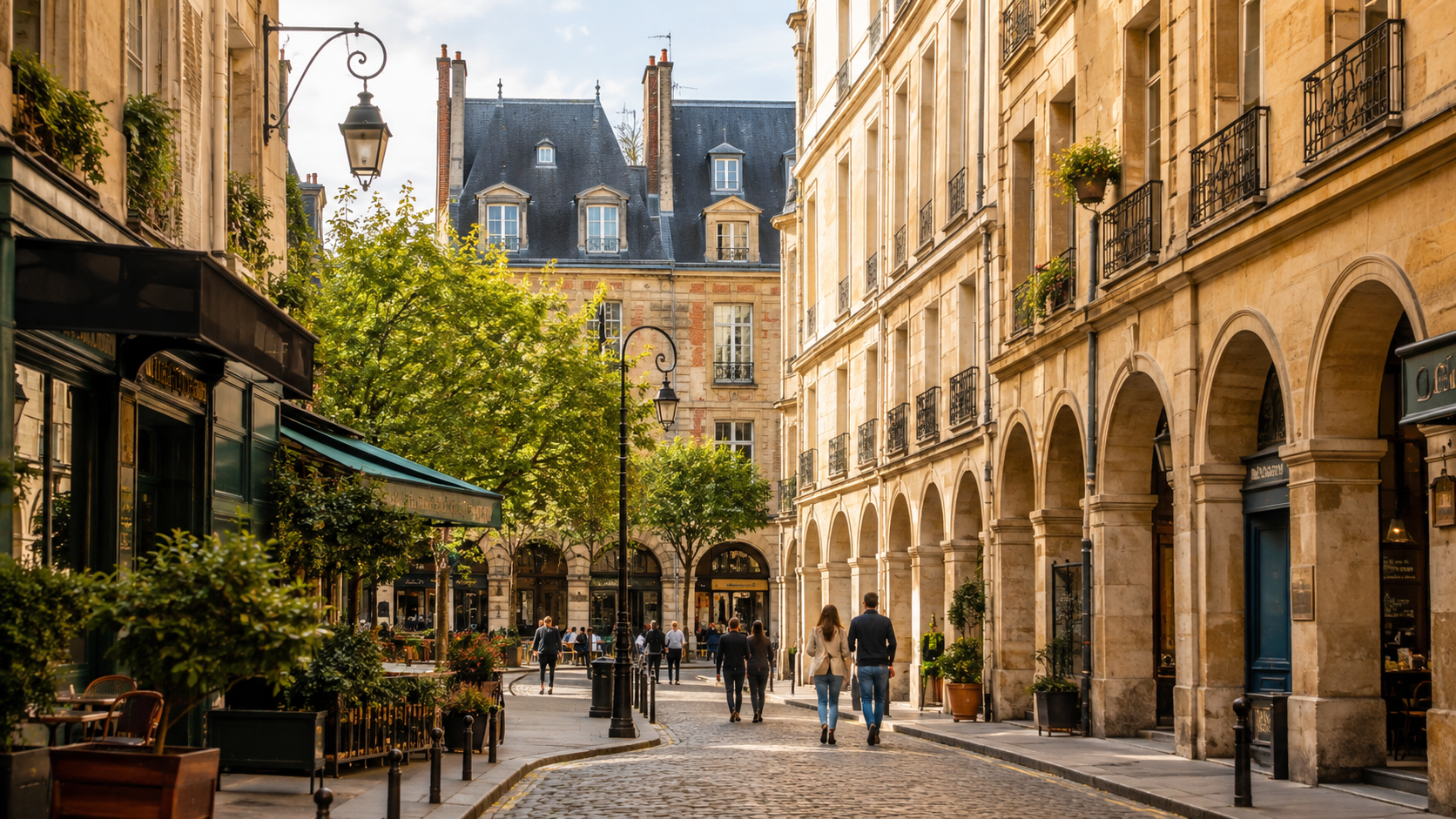
  • Non-Touristy Things to Do in Paris: 17 Ways to Experience Paris Like a Local

    Non-Touristy Things to Do in Paris: 17 Ways to Experience Paris Like a Local

    Non-Touristy Things to Do in Paris: 17 Ways to Experience Paris Like a Local

    Paris has some of the most famous attractions in the world. The Eiffel Tower, the Louvre, Notre-Dame and Montmartre attract millions of visitors for very good reasons.

    But what happens when you want to experience the city beyond its sightseeing checklist?

    Finding non-touristy things to do in Paris does not necessarily mean searching for places nobody else knows. In a city this popular, genuinely secret places rarely stay secret for long.

    A better approach is to change the way you experience Paris.

    Spend a morning at a neighborhood market. Walk beside a canal instead of rushing between monuments. Explore residential streets. Have a picnic. Visit a small museum. Sit at a café without immediately planning your next attraction.

    This guide focuses on 17 ways to experience a more local side of Paris while still enjoying the city you came to see.

    You do not have to avoid the Eiffel Tower or skip the Louvre.

    Simply leave enough space between the famous sights to experience everyday Paris too.

    1. Start Your Morning at a Parisian Market

    One of the easiest ways to move away from the traditional tourist experience is to visit a neighborhood market.

    Markets are part of everyday Parisian life rather than attractions created specifically for visitors.

    Depending on the market, you may find fruit, vegetables, cheese, bread, flowers, prepared food and products from communities that have shaped modern Paris.

    The experience is simple.

    Walk.

    Look.

    Buy something that interests you.

    Listen to the conversations around you.

    Make the market part of your day

    Do not visit simply to photograph the stalls.

    Buy fruit for later, choose some cheese or pick up ingredients for a picnic.

    This immediately changes your relationship with the place.

    Instead of observing Parisian life, you participate in a small part of it.

    Different markets operate on different days and schedules, so check current opening information before building one into your itinerary.

    2. Follow Canal Saint-Martin Without a Destination

    The Seine is magnificent, but it does not have to be your only waterside walk in Paris.

    Canal Saint-Martin offers a completely different atmosphere.

    Iron footbridges cross the water. Boats move through locks. Trees line sections of the canal, and surrounding streets contain cafés, shops and places to stop.

    The best way to experience it is without making the walk another checklist.

    Choose a starting point and follow the canal.

    Cross a bridge because you like the look of the other side.

    Stop when something interests you.

    Sit beside the water.

    Have a coffee.

    Slow travel in the middle of a major city

    This is what makes Canal Saint-Martin particularly useful for travelers searching for less touristy things to do in Paris.

    Nothing dramatic has to happen.

    You are simply experiencing a part of the city at a slower pace.

    After several hours of museums and monuments, that can feel surprisingly refreshing.

    3. Have a Picnic Instead of Another Restaurant Meal

    Paris has extraordinary restaurants, and eating well should absolutely be part of your visit.

    But not every meal needs a reservation.

    Visit a bakery, market or local food shop and create your own picnic.

    Bread, cheese, fruit and something sweet are enough.

    Then find somewhere pleasant to sit.

    Depending on your route, this might be beside the Seine, in a park or somewhere along a canal.

    Why a picnic changes the experience

    A picnic gives you something that tightly scheduled sightseeing often removes:

    time.

    Nobody needs to bring the bill.

    Nobody is waiting for your table.

    You can sit, talk and watch Paris around you.

    For families, it also provides a welcome break during a long day of walking.

    And children or teenagers can help choose what everyone eats.

    Simple experiences often become some of the most memorable moments of a trip.

    4. Explore a Neighborhood Without Chasing Attractions

    Choose one Paris neighborhood and give yourself an hour with no list of monuments.

    This can feel strangely difficult if you normally plan trips around Google Maps pins.

    Try it anyway.

    Le Marais, the Latin Quarter, Montmartre, Batignolles or another neighborhood can all work.

    The objective is not to find a hidden attraction.

    It is to notice the neighborhood.

    Look at the shops.

    Architecture.

    Schools.

    Bakeries.

    Squares.

    Doors.

    People going about their day.

    Give yourself a small mission

    If walking without an objective feels too vague, create one.

    Find the most interesting doorway.

    Look for an old shop sign.

    Find three examples of street art.

    Choose your favorite building.

    Let someone else in the family decide which street to take at each intersection.

    This turns ordinary walking into exploration without requiring a formal tour.

    5. Take a Bus Instead of the Metro

    The Paris Metro is fast and extremely useful.

    It is also underground.

    If you use it for every journey, you can spend a surprising amount of your visit moving through tunnels while Paris passes unseen above you.

    For some journeys, take a regular city bus instead.

    You are not buying a sightseeing tour.

    You are simply using public transport like thousands of Parisians do every day.

    The journey may take longer, but you see neighborhoods and streets you would otherwise miss.

    Use transport as part of the experience

    This works particularly well when your feet need a rest.

    Find a seat, watch the city and let Paris come to you for a while.

    Not every minute needs to involve walking or visiting something.

    6. Discover the Village Atmosphere of Butte-aux-Cailles

    The Butte-aux-Cailles in the 13th arrondissement provides a contrast with the grand boulevards and monumental architecture of central Paris.

    Its smaller streets, low-rise buildings, cafés and street art give parts of the neighborhood an almost village-like atmosphere.

    This is somewhere to wander rather than somewhere to complete.

    There is no single attraction that justifies the visit.

    That is part of the point.

    Walk through the streets, look for murals and stop when somewhere appeals to you.

    Combine it with other parts of the 13th arrondissement if you want to make the journey worthwhile.

    7. Search for Street Art Instead of Masterpieces

    You could spend days inside Parisian museums.

    But art exists outside them too.

    Several areas of Paris are known for street art, particularly parts of the 13th arrondissement and Belleville.

    Large murals cover entire sides of buildings.

    Smaller works appear on walls, shutters and unexpected surfaces.

    Searching for them changes the way you walk.

    Instead of moving directly towards an attraction, you begin scanning the streets around you.

    Make it competitive

    Traveling with teenagers?

    Give everyone twenty minutes to photograph the most interesting piece they can find.

    Compare the results afterwards.

    There is no correct answer and no cultural knowledge required.

    Everyone simply has to look.

    This is one of the easiest ways to turn a neighborhood into an activity.

    8. Spend Time in Parc des Buttes-Chaumont

    Central Paris has famous formal gardens such as the Tuileries and Luxembourg Gardens.

    Parc des Buttes-Chaumont feels very different.

    Created on former quarry land, it contains steep slopes, winding paths, bridges and dramatic changes in elevation.

    Walk rather than simply finding a bench near the entrance.

    Climb towards the viewpoints.

    Follow smaller paths.

    Spend some time somewhere green without feeling that you need to photograph a famous monument.

    You can combine the park with Belleville or other northeastern neighborhoods for a half-day that feels very different from central Paris.

    9. Sit at a Café and Do Absolutely Nothing

    This may be the hardest recommendation in the entire article.

    Sit down.

    Order something.

    And do not immediately open your itinerary.

    Parisian cafés are not secret, obviously.

    But there is a difference between stopping for caffeine on the way to an attraction and allowing the café itself to become part of your experience.

    Watch the street.

    Talk.

    Read.

    Plan the rest of the day only when you feel like it.

    Stop measuring your trip by attractions

    Travel can become strangely competitive.

    How many things did you see?

    How many museums?

    How many famous places?

    But memories do not work that way.

    You may remember forty quiet minutes at a café more clearly than the fifth monument you rushed through that afternoon.

    10. Visit a Smaller Paris Museum

    The Louvre and Musée d’Orsay deserve their international reputations.

    But they are not the only museums in Paris.

    Smaller museums can offer something the major institutions struggle to provide: intimacy.

    Instead of spending hours navigating enormous collections, you can concentrate on one artist, period, house or story.

    Some museums occupy historic homes or unusual buildings, making the setting part of the experience.

    Choose according to your interests

    Do not visit a museum simply because somebody has described it as a hidden gem.

    Look at what it contains.

    Does it interest you?

    If yes, go.

    If not, choose something else.

    Experiencing a less touristy Paris should be about following your interests, not replacing one compulsory checklist with another.

    11. Buy Bread From a Neighborhood Boulangerie

    Buying a baguette sounds too ordinary to appear in a travel guide.

    That is exactly why it belongs here.

    Find a neighborhood bakery away from the major tourist attractions.

    Go inside.

    Choose something.

    Eat it.

    You do not need to identify “the best bakery in Paris.”

    In fact, searching for the internet’s number-one croissant can send you straight back into a queue of visitors doing exactly the same thing.

    Sometimes the better travel experience is simply finding somewhere that looks good.

    If you are staying in an apartment, buying breakfast locally can become a small daily ritual.

    12. Walk the Coulée Verte René-Dumont

    The Coulée Verte René-Dumont, also known as the Promenade Plantée, follows former railway infrastructure through eastern Paris.

    Parts of the route are elevated above street level.

    Other sections pass through greener environments and former railway spaces.

    It gives you a different perspective on the city.

    Instead of concentrating on monuments, you see apartment buildings, balconies, rooftops and ordinary streets from an unusual angle.

    It is particularly good for travelers who enjoy walking but want something other than another historic-center route.

    There is no need to complete the entire trail.

    Choose a section that fits naturally into your day.

    13. Explore Paris Early in the Morning

    Want to experience a famous part of Paris with a completely different atmosphere?

    Get up early.

    This does not make a place non-touristy, but it changes your experience of it.

    Streets that become crowded later in the day can feel remarkably peaceful in the morning.

    Watch cafés prepare for the day.

    See delivery vehicles arrive.

    Walk beside the Seine before the busiest hours.

    Explore a neighborhood while shutters are still opening.

    Use your first hour well

    You do not need to wake up at 5:00 AM.

    Even beginning at 7:30 or 8:00 can make a difference.

    Then, when the city becomes busier, move towards neighborhoods and experiences where crowds matter less.

    This is particularly useful if you are trying to see Paris in one day.

    14. Browse a Bookshop Without Searching for a Souvenir

    Paris has a long relationship with books, writers and publishing.

    Rather than entering a shop specifically to buy a Paris souvenir, browse because something interests you.

    Independent bookshops, specialist stores and second-hand sellers can turn an ordinary walk into a discovery.

    Even if you do not speak French fluently, photography, art, architecture and illustrated books can be accessible.

    The bouquinistes beside the Seine offer another version of this experience.

    Do not feel obliged to buy anything.

    Browsing is enough.

    15. Explore Belleville Beyond the Viewpoint

    Belleville attracts visitors for street art and views across Paris, but the neighborhood deserves more than a quick photograph.

    Walk through its streets.

    Notice how different it feels from the areas around the Louvre or Eiffel Tower.

    Look at independent businesses, restaurants, murals and the mixture of architectural styles.

    Paris is not culturally uniform.

    Neighborhoods have been shaped by different communities and different histories.

    Exploring areas such as Belleville helps reveal a more complex city than the Paris represented on postcards.

    Remember that neighborhoods are not attractions

    This matters.

    People live here.

    Do not photograph residents without permission or treat shops and homes as scenery.

    The aim is to experience another part of Paris respectfully.

    16. Let Teenagers Plan Part of the Day

    If you are visiting Paris as a family, one of the most effective ways to escape the standard tourist routine is simple:

    give up some control.

    Let your teenager choose an activity.

    Or a neighborhood.

    Or lunch.

    Or the route between two places.

    Adults often create family itineraries and then wonder why teenagers seem disengaged.

    Participation changes that.

    Turn exploration into a challenge

    Another option is to create a small scavenger hunt.

    During the day, find:

    • an unusual Metro entrance
    • a piece of street art
    • a hidden courtyard
    • an old shop sign
    • a Wallace fountain
    • an unexpected view
    • a painting containing an animal
    • a street musician

    You are still sightseeing.

    But now everyone has something to do.

    This approach also works particularly well inside museums, where searching and solving can transform a passive visit into an active experience.

    Make Your Paris Museum Visit Part of the Adventure

    Visiting the Louvre or Musée d’Orsay? Our self-guided museum games turn the visit into an interactive challenge for families and teenagers — at your own pace and with no fixed schedule.

    17. Leave One Afternoon Unplanned

    This may be one of the most genuinely non-touristy things to do in Paris.

    Leave space.

    No reservation.

    No list.

    No route that must be completed.

    Choose an area and see what happens.

    Maybe you discover a market.

    Maybe you spend an hour in a park.

    Maybe you find a small museum.

    Maybe you sit somewhere for much longer than expected.

    Maybe nothing remarkable happens at all.

    That is fine.

    Not every travel moment needs to become content

    You do not need to photograph everything.

    You do not need to prove that you discovered somewhere hidden.

    And you certainly do not need to complete somebody else’s list of “secret Paris.”

    Sometimes the best way to experience the city more locally is simply to stop behaving as though every minute needs to justify the cost of your trip.

    Non-Touristy Things to Do in Paris vs Paris Off the Beaten Path

    These ideas are closely related, but they are not quite the same.

    Going off the beaten path in Paris usually means exploring places outside the most conventional tourist routes: lesser-known neighborhoods, unusual walks and locations that receive fewer visitors.

    Experiencing non-touristy Paris is broader.

    You can have a non-touristy experience even in a famous area.

    Buy breakfast from a local bakery near the Louvre.

    Take a regular bus through central Paris.

    Walk beside the Seine early in the morning.

    Sit at a café near Montmartre without rushing to the next attraction.

    The location does not always need to be hidden.

    Sometimes the difference is simply how you experience it.

    Can You Experience a Local Side of Paris on Your First Visit?

    Yes — and you should.

    There is no reason a first visit has to consist entirely of famous attractions.

    The best approach is usually a mixture.

    Visit the Eiffel Tower.

    See Notre-Dame.

    Explore the Louvre if art interests you.

    Then create space between those experiences.

    Walk.

    Eat somewhere you found yourself.

    Visit a market.

    Explore a neighborhood.

    Spend an hour without an objective.

    This creates contrast.

    And contrast makes the famous attractions feel more special too.

    Non-Touristy Things to Do in Paris With Kids

    Families do not necessarily need more attractions.

    Often they need fewer.

    Children can become exhausted by a schedule designed around adult ideas of cultural importance.

    Mix major sights with ordinary pleasures.

    A playground.

    A picnic.

    Choosing pastries.

    Finding street art.

    Taking a bus.

    Watching boats pass through a canal lock.

    Give children something to find

    A simple scavenger hunt works almost anywhere in Paris.

    Choose five objects before leaving your accommodation and search for them throughout the day.

    Suddenly the journey between attractions becomes part of the entertainment.

    This is also an easy way to keep children observing the city rather than asking how long it is until the next stop.

    Non-Touristy Things to Do in Paris With Teenagers

    Teenagers usually need less supervision and more involvement.

    Let them navigate.

    Give them choices.

    Ask them to photograph the most interesting thing they find.

    Explore street art.

    Choose somewhere to eat together.

    Try a self-guided experience rather than another traditional group tour.

    Our guide to things to do in Paris with teenagers goes deeper into ways to make the city engaging for older children.

    The key idea is simple:

    do not make them passive passengers.

    How to Avoid Tourist Traps in Paris

    Wanting a more local experience does not mean becoming suspicious of everything popular.

    A crowded restaurant is not automatically bad.

    A famous attraction is not automatically overrated.

    But a few habits help.

    Walk one or two streets away

    Restaurants and shops immediately beside major attractions often exist primarily because of their location.

    Walking a little farther can completely change your options.

    Check menus before sitting down

    You do not need to analyze hundreds of reviews.

    Look at the menu.

    Look at prices.

    Does it appeal to you?

    Make a decision.

    Do not chase every viral location

    Social media can transform an ordinary street, café or bakery into a destination.

    Sometimes it deserves the attention.

    Sometimes you spend forty minutes queuing for something available somewhere else without the queue.

    Your time in Paris has value too.

    How to Build a Less Touristy Day in Paris

    Here is one possible structure.

    Morning — Market and neighborhood

    Start at a local market.

    Buy breakfast or picnic supplies.

    Spend the rest of the morning exploring the surrounding neighborhood on foot.

    Lunch — Picnic

    Find a park, canal or other suitable place and eat what you bought earlier.

    Slow down.

    Afternoon — Walk and discover

    Choose an area such as Butte-aux-Cailles, Belleville or the Coulée Verte.

    Do not attempt to see all three.

    Explore one properly.

    Late afternoon — Café

    Stop somewhere because you like it, not because it appeared in a “Top 10 Paris Cafés” article.

    Evening — Keep it flexible

    Walk.

    Eat.

    Return to somewhere you enjoyed earlier.

    Or go and see the Eiffel Tower illuminated.

    Remember: experiencing local Paris does not prohibit you from enjoying famous Paris.

    You Don’t Need to Choose Between Tourist Paris and Local Paris

    There is sometimes a strange pressure around travel to prove that you are not a tourist.

    But you are visiting Paris.

    You are a tourist.

    That is perfectly fine.

    The goal is not to pretend you live there.

    The goal is to experience more than one version of the city.

    Go to the Louvre.

    Then visit a neighborhood market.

    Photograph the Eiffel Tower.

    Then take a regular bus.

    Walk through Montmartre.

    Then leave the busiest streets behind.

    Spend an hour in Musée d’Orsay.

    Then spend another hour doing absolutely nothing beside a canal.

    The combination creates a richer trip.

    Explore Paris Instead of Simply Seeing It

    The difference between sightseeing and exploring is often participation.

    When you are sightseeing, someone tells you what you should see.

    When you are exploring, you have a reason to look.

    You search.

    Choose.

    Walk.

    Observe.

    Discover.

    Sometimes you solve something.

    That philosophy is also behind Escape The Museum.

    Our self-guided Louvre and Musée d’Orsay games give families, teenagers and curious travelers another way to experience two of Paris’s greatest museums.

    Instead of simply moving from famous artwork to famous artwork, you follow a story, look for details and solve challenges along the way.

    No group.

    No fixed schedule.

    Explore at your own pace.

    Want to experience Paris differently?

    Discover our Paris museum games and turn your next museum visit into part of the adventure.

    Turn Your Paris Museum Visit Into an Adventure

    Visiting the Louvre or Musée d’Orsay? Explore the masterpieces in a different way. Follow the story, look for hidden details and solve challenges as you make your way through the museum — at your own pace, with no guide and no fixed schedule.
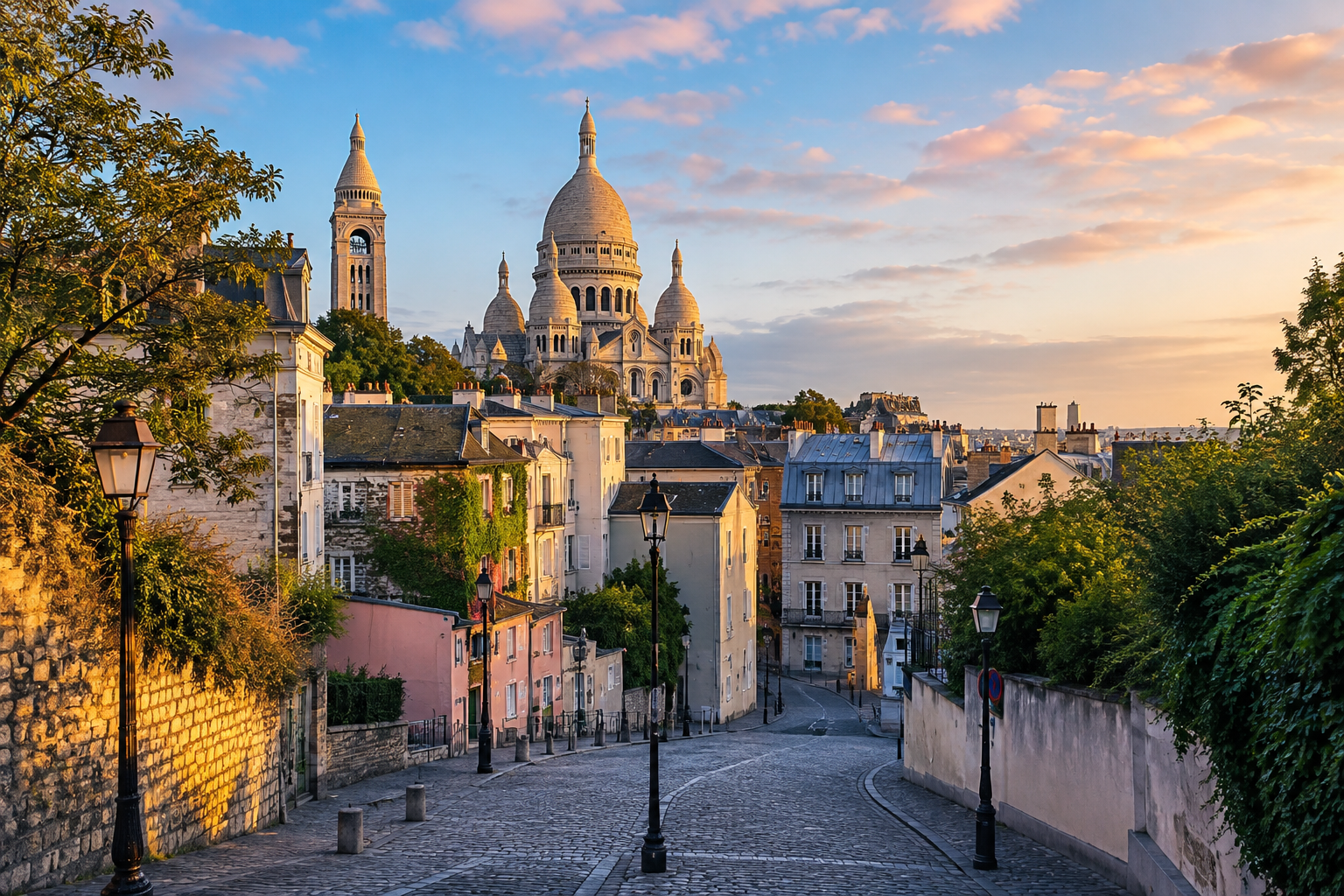
  • Paris in One Day: The Perfect Itinerary for First-Time Visitors

    Paris in One Day: The Perfect Itinerary for First-Time Visitors

    Paris in One Day: The Perfect Itinerary for First-Time Visitors

    Can you really see Paris in one day?

    Not all of it, of course. Paris is a city that could fill a week, a month or dozens of return visits. But if you only have 24 hours, you can still experience an extraordinary combination of famous monuments, beautiful neighborhoods, museums, riverside walks and Parisian atmosphere.

    The secret is not trying to see everything.

    A good one day in Paris itinerary should minimize unnecessary journeys, combine attractions that naturally fit together and leave enough time to actually enjoy the city.

    This itinerary does exactly that.

    You will start around Notre-Dame and the historic heart of Paris, walk along the Seine, choose how you want to experience the Louvre, cross through the Tuileries Garden, continue towards the Eiffel Tower and finish the day in Montmartre.

    It is ambitious, but realistic.

    And if you are visiting Paris with children or teenagers, we will also show you where to slow down, what you can skip and how to make the day more interactive.

    Here is how to experience Paris in one day without turning your visit into a race.

    Paris in One Day: Itinerary at a Glance

    Before we start, here is the basic route:

    8:00 — Île de la Cité and Notre-Dame

    9:00 — Walk along the Seine

    10:00 — Louvre Museum or Louvre courtyard

    12:30 — Lunch

    13:30 — Tuileries Garden and Place de la Concorde

    15:00 — Eiffel Tower and Champ de Mars

    17:30 — Montmartre

    20:00 — Dinner and sunset/evening in Paris

    This itinerary is designed primarily for first-time visitors who want to experience several essential sides of Paris in a single day.

    You can follow the entire route or adapt it according to your interests.

    Museum lover?

    Spend longer at the Louvre.

    Traveling with teenagers?

    Turn part of the museum visit into a challenge.

    Already seen the Eiffel Tower?

    Use the afternoon to explore a less touristy neighborhood instead.

    The itinerary should serve you, not the other way around.

    8:00 AM — Start at Notre-Dame and Île de la Cité

    Start your one day in Paris early.

    Paris changes dramatically as the morning develops, and arriving in the historic center before the busiest hours gives you time to enjoy the surroundings without immediately feeling part of a crowd.

    Begin on Île de la Cité, one of the islands in the Seine and the historical heart of Paris.

    Notre-Dame is the obvious landmark.

    Take time to look at the cathedral from different angles rather than simply photographing the façade and leaving.

    Walk around the surrounding streets and towards the Seine.

    Look for the details around Notre-Dame

    One of the easiest mistakes when visiting Paris quickly is looking only at major monuments.

    Instead, use Notre-Dame as your starting point for observing the city.

    Look at the bridges.

    The façades.

    The river.

    The booksellers along the Seine.

    The towers and rooftops surrounding you.

    You have only just started the day, but you are already standing in an area containing centuries of Parisian history.

    Optional: Sainte-Chapelle

    Sainte-Chapelle is only a short walk away and contains some of the most spectacular stained glass in Paris.

    However, with only one day available, adding another interior visit has consequences.

    If Sainte-Chapelle is a priority, book ahead and include it.

    Otherwise, continue walking.

    With a Paris in one day itinerary, every additional attraction means spending less time somewhere else.

    9:00 AM — Walk Along the Seine

    From Île de la Cité, begin moving west along the Seine.

    Walking is essential to this itinerary.

    The Paris Metro is excellent, but if you travel underground between every landmark, you miss much of what makes the city special.

    The Seine connects many of Paris’s greatest monuments, making it a natural route through the center.

    If you prefer to explore this part of the city entirely on foot, our self-guided walking tour of Paris follows a route from Notre-Dame through the Louvre and Tuileries towards the Eiffel Tower.

    Walk towards the Louvre.

    Depending on which bank and route you choose, you can enjoy views of bridges, historic buildings and riverside life along the way.

    Do not rush.

    This is not dead time between attractions.

    The walk is part of visiting Paris.

    Bouquinistes and the riverbanks

    Along sections of the Seine you will see the famous green boxes of the bouquinistes, traditionally selling books, prints and other items.

    They are one of those small Parisian details that can easily become more memorable than another photograph of a monument.

    If something catches your attention, stop.

    A successful day in Paris needs a little flexibility.

    10:00 AM — Visit the Louvre

    Eventually you reach one of the most famous museums in the world.

    The Louvre presents the biggest planning decision of the day.

    Do you go inside?

    Option 1: Visit the Louvre

    If this is your first visit to Paris and seeing the Mona Lisa or the museum’s collections matters to you, go inside.

    But do not attempt to see everything.

    The Louvre is enormous.

    Trying to cover the entire museum in two hours usually produces exhaustion rather than appreciation.

    Choose a limited number of works or sections.

    For a one-day itinerary, around two hours inside is a reasonable compromise.

    That gives you enough time to experience the museum without allowing it to consume most of your day.

    Turn the Louvre into a challenge

    Families visiting with children or teenagers can approach the museum differently.

    Instead of walking from masterpiece to masterpiece while everyone gradually loses energy, give the visit a purpose.

    Look for details.

    Search for particular artworks.

    Solve clues.

    Compare paintings.

    Let teenagers navigate part of the museum.

    Turning observation into an activity can completely change how younger visitors experience an art museum.

    Our Louvre museum game follows exactly this approach, transforming the visit into a self-guided adventure that you complete at your own pace.

    There is no guide to follow and no fixed starting time.

    That flexibility makes this type of experience particularly useful when you are trying to see Paris in one day.

    Option 2: Skip the Louvre interior

    There is absolutely nothing wrong with skipping the museum.

    If art is not a priority, do not spend several hours inside simply because a guidebook tells you that you should.

    Explore the Cour Napoléon and see the glass pyramid.

    Walk through the surrounding courtyards.

    Then continue towards the Tuileries.

    You immediately gain two or three hours that can be used elsewhere.

    This can be the better choice for travelers who prefer neighborhoods, architecture and walking.

    Turn Your Louvre Visit Into an Adventure

    Visiting the Louvre during your one day in Paris? Turn your museum stop into an interactive experience. Follow a story, search for hidden details and solve challenges — at your own pace, with no guide and no fixed schedule.

    12:30 PM — Stop for Lunch

    Do not turn lunch into another logistical problem.

    With only one day in Paris, it is tempting to eat as quickly as possible so you can return to sightseeing.

    But sitting down for a while is useful.

    Your feet need a break.

    So does your attention.

    Choose somewhere reasonably close to your route rather than crossing Paris for a restaurant you saw on social media.

    A relaxed lunch of around an hour gives everyone a chance to reset before the afternoon.

    If you are traveling as a family, this is also a good moment to ask everyone what they have enjoyed most so far.

    You may discover that your carefully planned afternoon needs adjusting.

    That is fine.

    1:30 PM — Walk Through the Tuileries Garden

    From the Louvre, continue west into the Tuileries Garden.

    This is one of the easiest and most pleasant connections between major Paris landmarks.

    Instead of taking transport, you move gradually from the Louvre towards Place de la Concorde through one of the city’s most famous gardens.

    The change of pace is welcome after a museum visit.

    Sit for a few minutes.

    Look back towards the Louvre.

    Continue towards the western end of the gardens.

    Paris works particularly well when you alternate intensive attractions with open spaces like this.

    2:15 PM — Place de la Concorde

    At the end of the Tuileries you reach Place de la Concorde.

    You do not need to spend long here.

    Look at the square, the obelisk and the surrounding architecture.

    From this part of Paris, you are connected visually with several of the city’s grandest axes.

    The Champs-Élysées stretches west towards the Arc de Triomphe.

    But should you walk all of it?

    Probably not today.

    Do you need the Champs-Élysées?

    If you have only one day, I would not dedicate a large part of the afternoon to walking the entire avenue unless it is particularly important to you.

    Paris contains more interesting walks.

    See the beginning of the avenue from Place de la Concorde, understand where you are, and continue towards the Eiffel Tower.

    You can save the Arc de Triomphe for another trip — or include it by sacrificing something else.

    This is the recurring principle of a successful Paris in one day itinerary:

    choose rather than accumulate.

    3:00 PM — Head Towards the Eiffel Tower

    Now it is time for Paris’s most recognizable landmark.

    Depending on energy levels, weather and your preferred route, you can walk part of the way or use public transport.

    If you have already walked throughout the morning, this is a sensible moment to save your legs.

    Approaching the Eiffel Tower is part of the experience.

    You see it appear between buildings and grow larger as you move closer.

    Even travelers who expect the tower to feel overly familiar from photographs are often surprised by its scale in person.

    3:30 PM — Eiffel Tower and Champ de Mars

    Give yourself time around the Eiffel Tower rather than treating it as a photograph-and-leave stop.

    Walk around the area.

    Change viewpoints.

    Explore the Champ de Mars.

    Look back towards the city.

    Should you go up the Eiffel Tower?

    This depends entirely on your priorities.

    Going up the tower is an iconic experience, but it requires time.

    Queues, security and the visit itself can occupy a significant part of your afternoon.

    If reaching the top of the Eiffel Tower is one of your dreams, book ahead and do it.

    Your itinerary should reflect what matters to you.

    If your priority is experiencing more of Paris at street level, enjoy the tower from below and continue.

    There is no correct answer.

    5:00 PM — Time to Change Neighborhoods

    By late afternoon, you will have experienced a substantial part of monumental Paris.

    Notre-Dame.

    The Seine.

    The Louvre.

    The Tuileries.

    The Eiffel Tower.

    Now I would change the atmosphere completely.

    Head north towards Montmartre.

    This is one of the few moments during the day when using the Metro makes obvious sense.

    You are moving between two distinct parts of Paris, and walking the entire distance would consume time and energy that are better used exploring your destination.

    5:30 PM — Explore Montmartre

    Montmartre is the ideal place to finish a day in Paris because it feels different from the monumental center.

    Its hills, staircases and smaller streets create a different rhythm.

    Of course, you should see Sacré-Cœur.

    But do not make Sacré-Cœur the entire purpose of visiting Montmartre.

    Wander beyond Sacré-Cœur

    Walk the surrounding streets.

    Look for staircases.

    Old façades.

    Small squares.

    Unexpected views.

    Artists and traces of the neighborhood’s creative past.

    Parts of Montmartre are extremely touristy, particularly around Place du Tertre.

    Move a few streets away and the atmosphere can change quickly.

    This is where our guide to Paris off the beaten path becomes useful.

    Even one of Paris’s most famous neighborhoods contains quieter corners if you move beyond its most obvious attractions.

    Make Montmartre interactive

    Montmartre is also an excellent neighborhood for self-guided exploration.

    If you want to explore the neighborhood on foot, follow our self-guided Montmartre walking tour, designed to take you beyond the most obvious sights.

    Instead of following someone holding an umbrella through the streets, you can use stories, historical details and challenges to give your walk structure while keeping control of your own time.

    Search for something.

    Follow a story.

    Find an unusual building.

    Look for traces of an artist.

    Notice details other visitors pass without seeing.

    This combination of walking and discovery is particularly useful for families with teenagers.

    You are no longer simply walking because the adults want to see another neighborhood.

    There is something to do along the way.

    7:30 PM — Dinner in Montmartre or Nearby

    By now, you have earned dinner.

    Do not schedule another major attraction immediately.

    Find somewhere to eat and allow the pace of the day to slow.

    You have covered a remarkable amount of Paris.

    This is also the point where a rigid itinerary should end.

    Maybe everyone still has energy.

    Maybe nobody does.

    Both are acceptable.

    9:00 PM — Paris After Dark

    If you still want more, Paris becomes another city after sunset.

    You have several options.

    Stay around Montmartre and enjoy the evening atmosphere.

    Return towards the Seine.

    See the Eiffel Tower illuminated.

    Walk through a neighborhood you discovered earlier.

    Or simply sit somewhere with a drink and watch the city.

    You do not have to fill every minute.

    After twelve hours of exploring, sometimes the best final Paris experience is simply being in Paris.

    One Day in Paris With Kids

    The itinerary above works for families, but I would make a few adjustments when visiting Paris with kids.

    The biggest mistake is assuming children have the same sightseeing endurance as adults.

    They usually do not.

    And even if they can physically continue walking, that does not mean they are enjoying the day.

    Reduce the number of compulsory stops

    Choose three major experiences rather than six.

    For example:

    Notre-Dame and the Seine.

    The Louvre.

    Eiffel Tower.

    Everything else becomes optional.

    If the family is still enthusiastic, continue.

    If not, stop for ice cream, find a park or simply explore without an objective.

    Make observation part of the day

    Give children things to find.

    A gargoyle.

    A red Metro sign.

    A painting containing an animal.

    A strange statue.

    The Eiffel Tower appearing between buildings.

    A street musician.

    A boat on the Seine.

    You have created a Paris scavenger hunt without needing any special equipment.

    One Day in Paris With Teenagers

    Teenagers are different.

    They can usually manage the walking, but endless passive sightseeing can become tedious.

    Give them some control.

    Let them navigate.

    Ask them to choose where you eat.

    Turn the Louvre into a game.

    Search for street art.

    Let them photograph the day from their perspective.

    Our guide to things to do in Paris with teenagers explores this approach in much more detail.

    Paris becomes far more engaging when teenagers participate in discovering it instead of simply following the adults.

    What If You Don’t Want to Visit the Louvre?

    Easy.

    Remove it.

    Your morning could become:

    Notre-Dame → Latin Quarter → Seine → Tuileries.

    Or use those extra hours to explore somewhere completely different.

    Canal Saint-Martin.

    Le Marais.

    Belleville.

    The covered passages.

    A longer Montmartre walk.

    Our guide to unusual things to do in Paris contains plenty of alternatives if the standard itinerary does not appeal to you.

    A one-day itinerary should not become a list of obligations.

    What If It Rains?

    Paris does not stop when it rains.

    But your priorities may change.

    Spend longer inside the Louvre.

    Explore the covered passages.

    Visit another museum.

    Stop at cafés more frequently.

    Reduce long outdoor walks.

    If you are traveling with a family, keeping everyone reasonably dry and comfortable is more important than completing an itinerary exactly as written.

    Do not fight the weather.

    Adapt to it.

    Is a Hop-On Hop-Off Bus Worth It With Only One Day?

    It can be.

    For travelers with limited mobility, younger children or little desire to walk long distances, a sightseeing bus can connect major attractions efficiently while still allowing you to see the city above ground.

    But if you are comfortable walking, I prefer combining walking with occasional Metro journeys.

    Paris rewards pedestrians.

    You notice far more.

    And many of the most memorable moments happen between the famous places.

    Can You Do Paris in One Day From London?

    Yes, but this creates a much tighter schedule.

    High-speed trains make a London-to-Paris day trip possible, but you need to account for station arrival times, security procedures and your return journey.

    If you are arriving at Gare du Nord in the morning, do not attempt every stop in this itinerary.

    Choose priorities.

    For example:

    Morning: Notre-Dame and Seine.

    Late morning/early afternoon: Louvre.

    Afternoon: Eiffel Tower.

    Early evening: Montmartre if time allows.

    Then return to Gare du Nord with a generous safety margin.

    Missing one attraction is disappointing.

    Missing your international train is considerably worse.

    How Much Walking Is This Paris One-Day Itinerary?

    Quite a lot.

    Even using the Metro for the longer transfers, expect a full day on your feet.

    Comfortable shoes matter more than fashionable ones.

    Do not underestimate distances inside museums either.

    A two-hour Louvre visit can add substantial walking before you even return to the streets.

    If someone in your group struggles with long distances, reduce the itinerary.

    Paris will still be there next time.

    Should You Buy Tickets in Advance?

    For major attractions, advance planning can save valuable time.

    This is especially important when your entire visit lasts only one day.

    Check official websites for current opening times, ticket requirements and possible closures before your visit.

    If you plan to enter the Louvre or climb the Eiffel Tower, reserving an appropriate time slot can give your itinerary much more structure.

    But avoid booking every hour.

    Too many reservations turn a holiday into an appointment schedule.

    One or two fixed visits are enough.

    How to Make the Most of Paris in One Day

    The difference between a memorable day and an exhausting one often comes down to a few simple decisions.

    Start early

    The first hours of the morning are valuable.

    Use them.

    Walk between nearby attractions

    Do not automatically take the Metro.

    Paris itself is what you came to see.

    Use transport for long jumps

    Eiffel Tower to Montmartre?

    Take the Metro.

    Save your walking energy for the neighborhoods themselves.

    Do not queue for things you do not care about

    Your time is limited.

    Use it according to your interests.

    Eat

    This sounds obvious.

    It stops being obvious when people try to fit ten attractions into eight hours.

    Leave room for discovery

    If an interesting street appears, walk down it.

    If everyone loves somewhere, stay longer.

    If an attraction disappoints you, leave.

    The perfect itinerary is not the one you complete exactly.

    It is the one that produces the best day.

    Paris in One Day or Two Days?

    If you can stay two days, do it.

    The second day changes everything.

    You can dedicate more time to neighborhoods.

    Visit another museum.

    Explore Montmartre without watching the clock.

    Spend time in Le Marais.

    Walk along Canal Saint-Martin.

    Discover some of the places from our Paris off the beaten path guide.

    With one day, you experience the highlights.

    With two days, you begin to experience the city.

    But if one day is all you have, do not think of it as an inadequate trip.

    Think of it as an introduction.

    Paris is very good at making people want to return.

    The Best Route for Paris in One Day

    If I had to reduce this entire guide to one route for a first-time visitor, it would be:

    Notre-Dame → Seine → Louvre → Tuileries → Eiffel Tower → Montmartre.

    It works because it combines different versions of Paris.

    Medieval Paris.

    Riverside Paris.

    Artistic Paris.

    Monumental Paris.

    Neighborhood Paris.

    You experience famous sights without spending the entire day traveling between disconnected locations.

    More importantly, you spend substantial parts of the day walking through the city.

    That is essential.

    Because Paris is not simply a collection of attractions.

    The streets between them are part of the experience.

    Turn Your One Day in Paris Into an Adventure

    When you only have one day, every experience needs to earn its place in the itinerary.

    That does not mean rushing.

    It means making the places you choose more engaging.

    If the Louvre or Musée d’Orsay is part of your day, you can explore the museum while following a story, observing artworks and solving challenges along the way.

    No group.

    No fixed schedule.

    No need to replace the museum with your phone.

    Just another reason to look more closely.

    Turn Your Paris Museum Visit Into an Adventure

    Visiting the Louvre or Musée d’Orsay? Explore the masterpieces in a different way. Follow the story, look for hidden details and solve challenges as you make your way through the museum — at your own pace, with no guide and no fixed schedule.
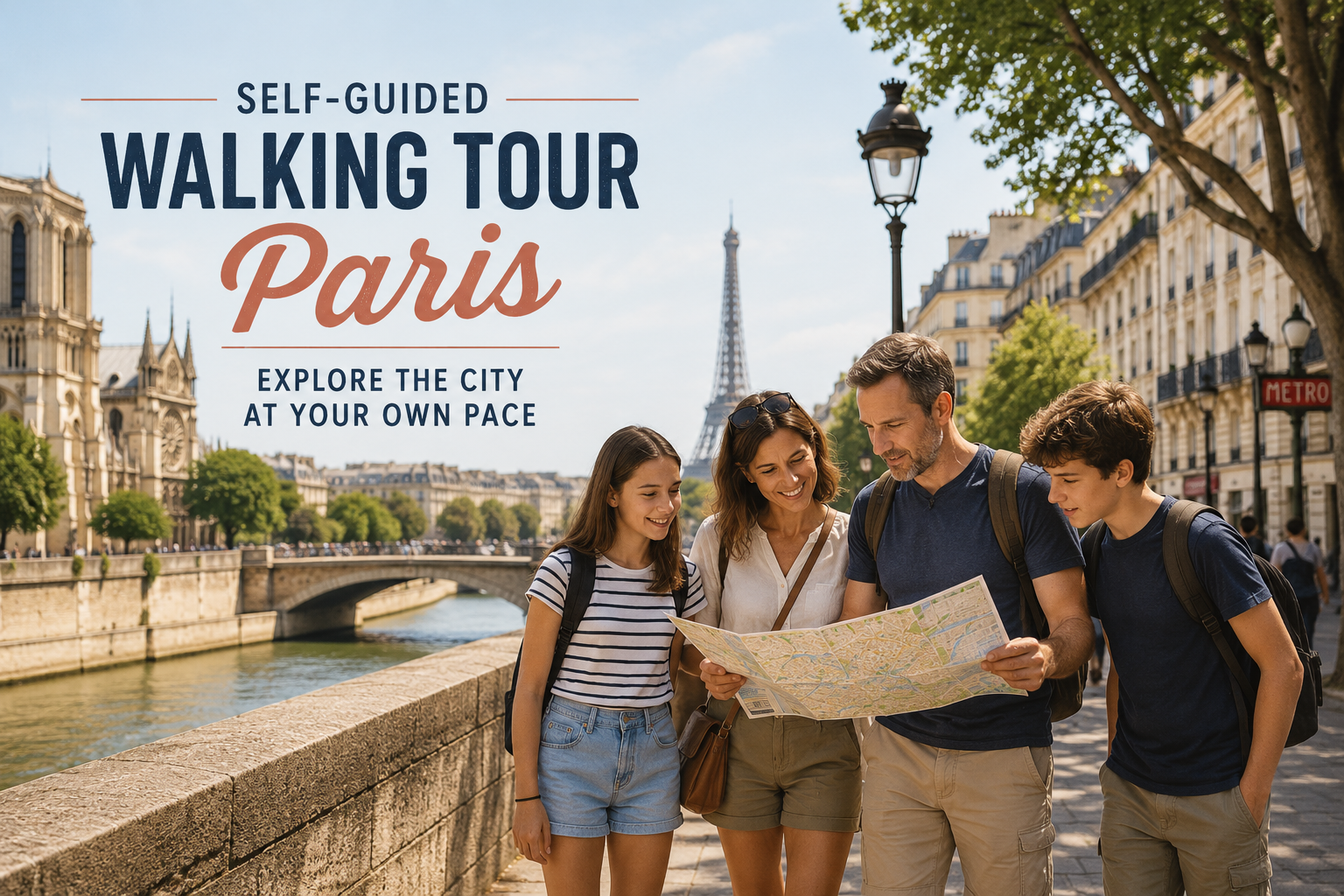
  • Paris Off the Beaten Path: 17 Unusual Places Beyond the Tourist Crowds

    Paris Off the Beaten Path: 17 Unusual Places Beyond the Tourist Crowds

    Paris Off the Beaten Path: 17 Unusual Places Beyond the Tourist Crowds

    The Eiffel Tower, the Louvre and Notre-Dame belong on almost every first trip to Paris. But some of the most memorable moments in the city happen when you stop following the classic sightseeing route.

    Exploring Paris off the beaten path means wandering beyond the famous monuments and discovering neighborhoods, hidden gardens, unusual museums, old railway lines and streets where everyday Parisian life is still part of the experience.

    You do not have to travel to the outskirts of the city or deliberately avoid everything popular. Sometimes an unexpected place is only a few streets away from one of Paris’s busiest attractions.

    This guide takes you through 17 places and experiences that reveal a different side of Paris, from quiet corners of Montmartre to forgotten railway tracks and lesser-known museums.

    If you enjoyed our guide to unusual things to do in Paris, think of this as the next step: moving away from individual unusual attractions and exploring the city itself differently.

    1. Explore the Other Side of Montmartre

    Montmartre is hardly a secret.

    Millions of visitors climb towards Sacré-Cœur every year, and Place du Tertre can be one of the busiest places in northern Paris.

    But walk beyond these famous spots and Montmartre changes surprisingly quickly.

    Instead of immediately heading back towards the center, continue exploring the streets around Lamarck-Caulaincourt.

    Look for quiet staircases, small houses and streets that reveal traces of the neighborhood Montmartre was before tourism became such an important part of it.

    Rue de l’Abreuvoir is one of the most photographed streets in the area, but there are plenty of less obvious corners nearby.

    Explore Montmartre rather than simply visiting it

    The best way to experience this part of Paris is without rushing.

    Instead of creating a route that moves from attraction to attraction, give yourself time to notice details between them.

    Old signs, unusual façades, steep staircases and unexpected views become part of the experience.

    Montmartre is particularly well suited to self-guided exploration because the neighborhood itself tells a story as you walk.

    It is also why we see Montmartre as an ideal place to combine walking, history and small challenges: a way of discovering the neighborhood rather than simply passing through it.

    2. Walk Along the Petite Ceinture

    For decades, a railway circled Paris.

    The Petite Ceinture, or Little Belt, was constructed during the 19th century and once carried passengers and goods around the city.

    As other forms of transport developed, the railway gradually lost its original importance.

    Today, parts of the old line have been transformed into public walking areas.

    The result is one of the most interesting places to experience Paris off the beaten track.

    Old railway infrastructure sits beside trees and wild vegetation. Bridges, tunnels and abandoned tracks provide glimpses of another layer of the city’s history.

    Different sections of the Petite Ceinture have different access arrangements, so check current information before choosing where to explore.

    It is not a single attraction with an entrance, ticket and prescribed route.

    That is precisely what makes it interesting.

    3. Discover La Campagne à Paris

    There are parts of Paris that barely look like Paris.

    La Campagne à Paris, in the 20th arrondissement, is one of them.

    This small residential area was developed in the early 20th century and is characterized by rows of houses rather than the apartment buildings that dominate much of the capital.

    Climb the streets and stairways and you will find greenery, individual homes and a surprisingly peaceful atmosphere.

    It feels more like a small town inserted into Paris than a neighborhood within one of Europe’s largest cities.

    There is no major monument here.

    No museum.

    No attraction you need to queue for.

    The pleasure comes simply from walking through somewhere unexpected.

    Remember that this is a residential neighborhood. Explore quietly and respect the people who live there.

    4. Find the Butte Bergeyre

    Not far from the much better-known Parc des Buttes-Chaumont lies another small elevated neighborhood.

    The Butte Bergeyre sits on a hill in the 19th arrondissement and can be reached via steep streets and staircases.

    At the top, you find a pocket of Paris that feels remarkably removed from the busy city below.

    There are houses, greenery and even a small vineyard.

    You can also find unexpected views towards Montmartre.

    Butte Bergeyre is exactly the type of place that makes exploring alternative Paris rewarding.

    There is not necessarily something spectacular waiting for you when you arrive.

    Instead, the journey, atmosphere and contrast with surrounding streets create the experience.

    5. Wander Through Buttes-Chaumont

    The Jardin du Luxembourg and Tuileries Garden are beautiful, but Paris has other green spaces with completely different personalities.

    Parc des Buttes-Chaumont is one of the best.

    Built on the site of former quarries, the park has dramatic changes in elevation, bridges, cliffs, paths and viewpoints.

    Its landscape feels much less formal than many central Parisian gardens.

    Walk around the lake, climb towards the higher viewpoints and explore the smaller paths rather than simply crossing the park.

    It is particularly enjoyable when you need a break from museums and monuments.

    Combine it with nearby neighborhoods such as Belleville or the Butte Bergeyre and you can create an entire half-day away from the traditional tourist center.

    6. Search for Street Art in the 13th Arrondissement

    The grand façades of central Paris create one of the world’s most recognizable urban landscapes.

    The 13th arrondissement shows you something different.

    Large-scale murals cover the sides of buildings, turning ordinary residential streets into an enormous open-air gallery.

    Some works occupy several floors.

    Others appear unexpectedly as you walk.

    Create your own street-art hunt

    Instead of following a rigid itinerary, make the murals the objective.

    Walk, search and photograph the pieces you like most.

    If you are traveling with teenagers, let everyone choose a favorite and compare them at the end.

    This simple approach transforms an ordinary neighborhood walk into a small urban challenge.

    It also encourages you to explore parts of Paris you might never visit if your itinerary consisted only of famous monuments.

    7. Step Into the Village of Mouzaïa

    Another unexpected residential corner can be found close to Buttes-Chaumont.

    Around Rue de Mouzaïa, narrow pedestrian lanes lined with small houses create an atmosphere far removed from the boulevards of central Paris.

    These lanes — known as villas — were developed for workers during the 19th century.

    Today they form one of the city’s most distinctive residential areas.

    Walk slowly through the neighborhood and enjoy the contrast.

    Again, this is someone’s home rather than a conventional attraction.

    Do not treat doors, gardens or windows as photography sets.

    The goal of exploring less touristy places should be to experience another side of the city respectfully.

    8. Discover the Musée de la Vie Romantique

    At the foot of Montmartre sits a small museum that many visitors walk straight past.

    The Musée de la Vie Romantique occupies a historic house associated with the artistic life of 19th-century Paris.

    The scale is part of its appeal.

    After visiting enormous institutions such as the Louvre, entering a small house museum provides a completely different cultural experience.

    The building, courtyard and garden contribute as much to the atmosphere as the collection itself.

    It is a useful reminder that Parisian culture does not exist only inside its world-famous museums.

    Smaller institutions often provide more intimate connections with particular periods, artists and stories.

    Make Your Paris Museum Visit Part of the Adventure

    Exploring Paris beyond the usual tourist route? You can bring the same spirit of discovery inside the Louvre or Musée d’Orsay. Follow a story, search for hidden details and solve challenges — at your own pace, with no guide and no fixed schedule.

    9. Follow Canal Saint-Martin

    The Seine dominates the image most travelers have of Parisian waterways.

    For something different, follow the Canal Saint-Martin.

    Its locks, iron footbridges and tree-lined banks create a much more relaxed atmosphere than many central areas.

    You can walk alongside the water, stop at nearby cafés or simply watch boats navigate the locks.

    There is no need to complete the entire canal.

    Choose a section and let the walk unfold naturally.

    Canal Saint-Martin works particularly well late in the afternoon, when you have already spent several hours visiting attractions and want something less structured.

    Sometimes going off the beaten path in Paris is not about finding a secret attraction.

    It is about changing pace.

    10. Explore Belleville

    Belleville is one of the most interesting neighborhoods for travelers who want to see a different side of contemporary Paris.

    Historically working-class and shaped by successive waves of immigration, the area has a cultural identity very different from the monumental center.

    Street art, independent businesses and a mixture of architectural styles make wandering here interesting.

    Head towards Parc de Belleville for one of the area’s best views.

    From elevated sections of the park, the Paris skyline opens in front of you.

    Look at the neighborhood, not just the viewpoint

    Do not visit only to photograph the panorama.

    Walk the surrounding streets.

    Look at shops, murals, cafés and everyday neighborhood life.

    This is where exploring Paris independently becomes especially rewarding.

    There is no compulsory attraction.

    You decide what catches your attention.

    11. Find the Arènes de Lutèce

    In the heart of the Latin Quarter lies evidence of a much older Paris.

    The Arènes de Lutèce are remains of a Roman amphitheater built when Paris was still Lutetia.

    What makes the site fascinating is not simply its age.

    It is its location.

    Modern apartment buildings surround a space connected to a city that existed almost two thousand years ago.

    Many travelers explore the Latin Quarter without realizing it is there.

    That makes the arena an excellent small detour when visiting this part of Paris.

    Combine it with nearby streets rather than making it a standalone destination.

    One of the pleasures of exploring hidden Paris is discovering layers of history embedded inside the modern city.

    12. Walk the Coulée Verte René-Dumont

    An abandoned railway was transformed into an elevated green walkway through eastern Paris long before New York created the High Line.

    The result is the Coulée Verte René-Dumont, also known as the Promenade Plantée.

    The route changes character as you walk.

    Some sections are elevated above streets, giving unusual views into surrounding buildings.

    Others pass through greener areas or former railway infrastructure.

    Walking here provides a completely different perspective on Paris.

    Instead of looking up at monuments, you look across rooftops, balconies and ordinary streets.

    It is a particularly good choice if you enjoy walking and want to combine urban history with green space.

    13. Explore the Covered Passages Beyond Galerie Vivienne

    Paris’s covered passages are becoming increasingly popular, but most visitors see only one or two.

    Galerie Vivienne is beautiful, but continue exploring.

    Passage des Panoramas, Passage Jouffroy and Passage Verdeau can be connected into a longer walk.

    Along the way you will find old shops, book dealers, restaurants and architectural details dating from another era of Parisian life.

    Turn several passages into one route

    Rather than treating each arcade as a separate attraction, connect them.

    The walk between passages becomes part of the experience.

    This is also a good activity for rainy weather because substantial parts of the route are protected.

    For travelers interested in history, architecture and unusual shopping environments, the passages offer an accessible introduction to a less obvious Paris.

    14. Visit Père Lachaise Beyond the Famous Graves

    Père Lachaise is famous for the people buried there.

    Oscar Wilde, Jim Morrison, Édith Piaf and Frédéric Chopin attract visitors from around the world.

    But the cemetery becomes more interesting when you stop treating it as a list of famous graves.

    Explore the smaller paths.

    Look at the sculptures, family tombs, chapels and inscriptions.

    Some monuments are beautiful.

    Others are strange, dramatic or deeply personal.

    The enormous cemetery feels almost like a separate city.

    Give yourself a few graves to find, but leave time to wander between them.

    Having something to search for adds purpose to the walk without preventing unexpected discoveries.

    15. Discover the Quiet Side of Le Marais

    Le Marais is one of Paris’s most visited neighborhoods, so including it in an article about Paris off the beaten path might seem strange.

    But even popular neighborhoods contain quieter layers.

    Move beyond Rue des Rosiers and Place des Vosges.

    Look for small courtyards, historic mansions and side streets.

    Slow down enough to notice doors, plaques and architectural details.

    This distinction is important.

    Exploring alternative Paris does not always require traveling somewhere obscure.

    Sometimes it simply means exploring a familiar place more carefully.

    Le Marais rewards exactly that approach.

    16. Walk Through the Jardin des Plantes and Its Surroundings

    The Jardin des Plantes is well known, but it often receives less attention from first-time visitors than Paris’s most famous central gardens.

    Its botanical collections, long avenues and surrounding scientific institutions create a different atmosphere.

    It also sits in an excellent area for walking.

    Combine the gardens with the Arènes de Lutèce and nearby Latin Quarter streets to create a route that mixes nature, Roman history and everyday Paris.

    Rather than jumping between attractions by Metro, connecting nearby places on foot reveals how the city fits together.

    That principle is central to exploring Paris beyond the standard tourist itinerary.

    17. Choose a Neighborhood and Explore Without a Checklist

    The final recommendation is not a place.

    It is a method.

    Choose a neighborhood, put away the list of must-see attractions for an hour and walk.

    Give yourself only a loose objective.

    Find an interesting café.

    Look for unusual architecture.

    Photograph three details you would normally ignore.

    Find the oldest-looking building.

    Follow a street simply because it looks interesting.

    Turn the city into a game

    If you are traveling as a family, create a small challenge.

    Who can find:

    • an unusual door?
    • a hidden garden?
    • a piece of street art?
    • an old shop sign?
    • a building with a date carved into it?
    • an unexpected view?
    • a tiny passage?
    • something connected to Parisian history?

    Suddenly, nobody is simply following the itinerary.

    Everyone is exploring.

    This is one of the simplest ways to experience Paris off the beaten path with teenagers or children because the journey itself becomes the activity.

    How to Explore Paris Off the Beaten Path

    Finding a different Paris does not require secret knowledge.

    It requires a slightly different approach to planning.

    Walk more

    Paris has an excellent public transport system, but taking the Metro between every attraction removes everything that exists between those attractions.

    When distances are reasonable, walk.

    A twenty-minute journey can reveal a market, courtyard, unusual building or café you would otherwise never know existed.

    Explore neighborhoods, not just attractions

    Instead of planning:

    Louvre → Eiffel Tower → Arc de Triomphe,

    try dedicating part of the day to one area.

    Montmartre, Belleville, Le Marais and the Latin Quarter all reward slower exploration.

    You will see fewer headline attractions but understand more about how different parts of Paris feel.

    Leave empty space in your itinerary

    An itinerary planned in thirty-minute blocks leaves no room for discovery.

    Do not be afraid of having an afternoon with only one or two fixed objectives.

    The empty spaces are where unexpected Paris often appears.

    Look carefully

    Some of the city’s most interesting details are small.

    Plaques explain historical events.

    Old advertisements remain painted on walls.

    Architectural details reveal how buildings were once used.

    Tiny mosaics and pieces of street art appear where you least expect them.

    The slower you move, the more Paris reveals.

    Paris Off the Beaten Path With Teenagers

    Traveling with teenagers can actually make alternative Paris more interesting.

    Instead of asking them to appreciate another monument simply because it is historically important, give them something active to do.

    Search for street art.

    Navigate part of the route.

    Choose the next place.

    Photograph unusual details.

    Solve clues.

    Find hidden locations.

    This gives teenagers a role in the experience rather than making them passive participants in someone else’s itinerary.

    The same principle works inside museums.

    Instead of trying to see every gallery, turn observation into part of the activity.

    Our Louvre and Musée d’Orsay museum games were created around this idea: use stories and challenges to encourage visitors to look more closely at the artworks and spaces around them.

    Culture does not have to disappear from a family itinerary.

    Sometimes it simply needs a different approach.

    Can You Still Visit the Famous Sights?

    Absolutely.

    Going off the beaten path does not mean avoiding the Eiffel Tower because other tourists want to see it.

    It does not mean skipping the Louvre.

    And it certainly does not mean spending your holiday trying to prove that you know places nobody else has discovered.

    Paris’s major monuments are extraordinary.

    Visit them.

    Then add contrast.

    Spend the morning at the Louvre and the afternoon walking beside Canal Saint-Martin.

    See Sacré-Cœur and then explore the quieter side of Montmartre.

    Visit Notre-Dame before looking for Roman Paris at the Arènes de Lutèce.

    The combination often produces a better trip than either approach alone.

    Build Your Own Alternative Paris Itinerary

    If you want to dedicate a day to a different side of Paris, keep the route geographically sensible.

    For example:

    Morning — Northeast Paris

    Start around Buttes-Chaumont.

    Explore the park before walking through nearby residential streets such as Mouzaïa or climbing towards Butte Bergeyre.

    Lunch — Belleville

    Continue towards Belleville and find somewhere to eat in the neighborhood.

    Walk through the surrounding streets and look for street art before visiting Parc de Belleville.

    Afternoon — Canal Saint-Martin

    Move towards Canal Saint-Martin and slow the pace.

    Follow the water, cross the footbridges and watch the locks.

    Evening — Explore without a plan

    Choose somewhere nearby for dinner and walk the surrounding streets.

    Do not add another major attraction simply because there is an empty hour.

    Allow the city to become the attraction.

    From Alternative Paris to Self-Guided Exploration

    Once you stop treating Paris as a checklist of monuments, another way of traveling becomes possible.

    You can explore neighborhoods through stories.

    Follow routes independently.

    Search for details.

    Discover historical clues.

    Solve challenges.

    And experience the city at your own pace rather than following a group.

    This is where self-guided walking tours and city games become particularly interesting.

    They sit somewhere between a traditional guided tour and wandering without any context.

    You still have a route and a reason to pay attention, but you decide how quickly you move, when you stop and what interests you most.

    Montmartre is especially suited to this type of exploration because its streets contain layers of artistic history, unusual characters and small details that are easy to miss when you simply walk from the Metro to Sacré-Cœur.

    We will be exploring this way of discovering Paris much more deeply in our upcoming guides.

    Discover Paris Differently

    The best Paris off the beaten path experiences are not necessarily the most secret ones.

    They are the experiences that change the way you interact with the city.

    Walk instead of rushing underground.

    Explore a neighborhood instead of collecting monuments.

    Look for details.

    Follow stories.

    Give yourself something to find or solve.

    And when you visit one of Paris’s great museums, you can use exactly the same approach.

    At Escape The Museum, our self-guided Louvre and Musée d’Orsay games turn museum visits into interactive adventures built around observation, stories and challenges.

    You explore at your own pace, with no guide and no fixed schedule.

    Visiting the Louvre or Musée d’Orsay? Explore the masterpieces in a different way. Follow the story, look for hidden details and solve challenges as you make your way through the museum — at your own pace, with no guide and no fixed schedule.
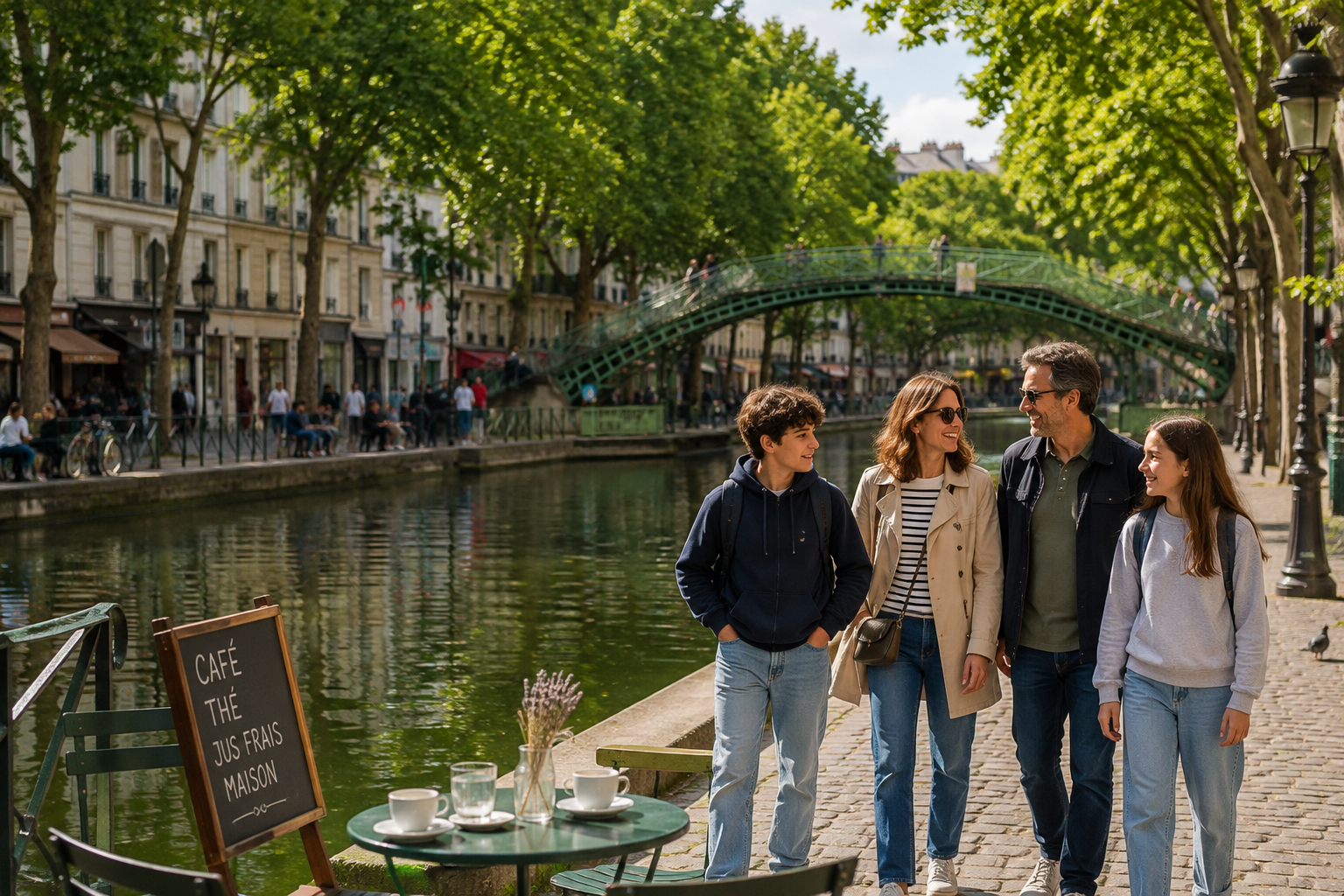
  • Musée d’Orsay with Kids: The Complete Family Guide

    Musée d’Orsay with Kids: The Complete Family Guide

    Musée d’Orsay with Kids: The Complete Family Guide

    Planning a visit to the Musée d’Orsay with kids? It can be one of the best museum experiences for families in Paris.

    Compared with the enormous Louvre, the Musée d’Orsay feels surprisingly manageable. Its collection is concentrated in a spectacular former railway station, many of its most famous paintings are colourful and instantly recognisable, and you can see extraordinary works by Monet, Van Gogh, Renoir and Degas without spending an entire day inside.

    That makes it particularly suitable for families.

    But there’s still a difference between simply taking children to the museum and helping them genuinely enjoy it.

    The secret is not trying to see everything. Choose a handful of masterpieces, give children things to look for, take advantage of the building itself, and leave before museum fatigue takes over.

    This guide will help you plan a successful Musée d’Orsay family visit, including how long to spend inside, the best artworks to see with children, a simple family route, practical tips and ideas for turning the museum into an interactive adventure.


    Is the Musée d’Orsay Worth Visiting with Kids?

    Absolutely—and for some families, it may actually be easier to visit than the Louvre.

    The Musée d’Orsay specialises primarily in art from the second half of the 19th century and early 20th century. This means children encounter paintings filled with recognisable scenes: dancers, cafés, gardens, trains, people at parties, landscapes, animals and colourful city streets.

    They don’t need to understand art history to find something interesting.

    The building itself also helps.

    Before becoming a museum, the Musée d’Orsay was the Gare d’Orsay, a railway station built for the 1900 Universal Exhibition. The huge central hall, enormous clocks and railway-station architecture give the museum a very different atmosphere from a traditional art gallery.

    For children, that creates an immediate question:

    Why is there an art museum inside an old train station?

    That’s a much better starting point than asking them to memorise the names of painters.


    Louvre or Musée d’Orsay with Kids?

    Families visiting Paris often wonder which museum they should choose.

    Both are extraordinary, but they offer very different experiences.

    Musée d’OrsayLouvre
    SizeMore manageableEnormous
    Ideal family visit1.5–2.5 hours2–3 hours
    Famous forImpressionism and Post-ImpressionismArt and antiquities across thousands of years
    Artists children may recogniseVan Gogh, Monet, Renoir, DegasLeonardo da Vinci and many others
    BuildingFormer railway stationHistoric royal palace
    Best forArt, colour and manageable explorationHistory, archaeology and iconic masterpieces
    Museum fatigueEasier to avoidRequires more planning

    If you have enough time in Paris, don’t necessarily choose between them. They complement each other extremely well.

    If you’re considering both museums, our complete guide to visiting the Louvre with kids will help you plan the other half of your Paris museum experience.

    The Louvre can introduce children to ancient civilizations, sculpture and Renaissance masterpieces, while the Musée d’Orsay offers a completely different journey into the colourful world of Impressionism and modern Paris.


    Before Visiting the Musée d’Orsay with Children

    A little preparation can transform the experience.

    Book Your Tickets in Advance

    The Musée d’Orsay is one of the most popular museums in Paris, particularly during weekends, holidays and the busiest travel months.

    Buying timed tickets in advance can make the beginning of your family visit much easier.

    Always check the museum’s official information before visiting because opening hours, exhibitions and visitor arrangements can change.

    Show Your Kids Three Paintings Before You Go

    Don’t give them an art-history lesson.

    Instead, show them three images:

    • a Van Gogh self-portrait
    • one of Monet’s paintings
    • one of Degas’s dancers

    Then tell them:

    “See if you can find these tomorrow.”

    Suddenly, entering the museum becomes a search.

    Recognition is powerful. When children eventually spot an artwork they’ve already seen, it feels like a discovery.

    Let Everyone Choose One Thing

    Before your visit, each member of the family can choose one artist, painting or object they want to find.

    Now the visit belongs to everyone rather than being an itinerary imposed by the adults.


    How Long Should You Spend at the Musée d’Orsay with Kids?

    For most families, around two hours is ideal.

    Younger children may be happier with 60–90 minutes, while older children and teenagers who enjoy art can comfortably spend two and a half hours or more.

    A useful guideline is:

    AgeSuggested Visit
    Under 660–90 minutes
    6–990 minutes–2 hours
    10–13Around 2 hours
    Teenagers2–3 hours

    Don’t turn the visit into a test of endurance.

    If everyone has enjoyed six or seven extraordinary artworks and the children are beginning to lose interest, you’ve had a successful museum visit.

    You don’t need another fifteen galleries to prove it.


    The Best Things to See at Musée d’Orsay with Kids

    The collection is extensive, so families benefit from having priorities.

    These are some of the themes and artists most likely to spark children’s curiosity.

    1. Start with the Building

    Before looking closely at any paintings, look around.

    The vast central space still reveals the building’s railway origins.

    Ask the children:

    • Where do you think the trains used to be?
    • Why is the ceiling so high?
    • What parts of the old station can you still recognise?
    • How would this building have looked full of passengers?

    It turns architecture into the first exhibit.

    And there’s another feature you shouldn’t miss later: the enormous clock.


    2. Find Van Gogh

    Vincent van Gogh is an excellent artist for introducing children to art because his paintings don’t require lengthy explanations.

    His colours are intense. His brushstrokes are visible. His skies move. His portraits feel unusual.

    Instead of telling children why Van Gogh is important, get them looking.

    Ask:

    Can you see the brushstrokes?

    Then move closer—without crossing any barriers—and look again.

    Ask:

    Which colours did he use that you wouldn’t expect?

    If you’re looking at one of his self-portraits, another simple question works beautifully:

    What kind of mood do you think he’s in?

    There is no need for a correct answer.

    Observation comes first.


    3. Discover Monet and the Impressionists

    Claude Monet gives families another opportunity to play with perception.

    Move close to an Impressionist painting and examine the individual marks of paint.

    Then step backwards.

    The image changes.

    Children can see for themselves how apparently loose brushstrokes become water, buildings, trees, clouds or reflections when viewed from a distance.

    That’s far more memorable than defining Impressionism for them.

    You can turn it into a mini experiment:

    1. Look from close up.
    2. Choose one area that seems almost abstract.
    3. Walk backwards.
    4. Watch the image appear.

    This is one of the simplest ways to help children understand why Impressionist paintings were revolutionary.


    4. Look for Degas’s Dancers

    Edgar Degas’s dancers are often popular with children because they capture movement rather than formal poses.

    Look at their bodies.

    Some are performing, but others are stretching, resting or waiting.

    Ask children which figure looks most tired.

    Or which one looks ready to perform.

    This encourages them to interpret body language—the same skill they use naturally when looking at people in everyday life.


    5. Find Renoir’s Crowds

    Paintings showing parties, cafés and groups of people are excellent for family observation games.

    Instead of concentrating immediately on the artist, explore the scene.

    Who is talking to whom?

    Who looks happy?

    Who isn’t paying attention?

    What might they be saying?

    Which person would you like to meet?

    A painting suddenly becomes a frozen moment in a story.


    6. Search for Animals

    Children don’t need to spend the entire visit looking at famous masterpieces.

    Give them a secondary mission:

    Find animals.

    Look in paintings, sculptures and decorative works.

    Count them.

    Compare them.

    Choose the strangest one.

    Small challenges like this are especially useful between major artworks because they keep children actively scanning the galleries.


    7. Don’t Miss the Giant Clock

    The Musée d’Orsay’s enormous clock is one of the most memorable features of the building.

    For families, it’s also a perfect reminder that this was once a railway station.

    Children can stand near the huge clock face and look towards Paris through the glass.

    It provides a complete change of pace from the galleries and is an excellent moment to stop, look outside and reset everyone’s attention.


    A Simple Musée d’Orsay Family Route

    You don’t need to follow every room number.

    Think of the visit as a sequence of experiences.

    Stop 1 — The Former Railway Station

    10 minutes

    Begin by exploring the architecture and understanding what the building used to be.

    Stop 2 — Early Works and the Main Hall

    15–20 minutes

    Walk through the central space and let children choose sculptures or objects that attract their attention.

    Stop 3 — Impressionism

    30 minutes

    Prioritise a small number of works by artists such as Monet, Renoir and Degas.

    Don’t try to see every painting.

    Stop 4 — Van Gogh and Post-Impressionism

    20–25 minutes

    Look for dramatic colours, unusual brushwork and portraits.

    Stop 5 — The Clock

    10–15 minutes

    Take a break from concentrated art viewing and enjoy one of the museum’s most distinctive architectural features.

    Stop 6 — Family Choice

    20 minutes

    For the final part of the visit, let the children decide.

    Return to something they liked, search for a particular object or explore a gallery that caught their attention earlier.

    Total time:

    Approximately 1 hour 45 minutes to 2 hours.


    Turn the Musée d’Orsay into a Scavenger Hunt

    One of the easiest ways to prevent museum boredom is to stop treating children as passive visitors.

    Give them missions.

    Try these:

    Find…

    • a painting containing water
    • someone wearing a hat
    • a dancer
    • a train or something connected with travel
    • an animal
    • a self-portrait
    • a painting dominated by blue
    • someone who looks angry
    • a picture showing Paris
    • an artwork you’d hang in your bedroom

    You can make the final challenge particularly useful:

    Everyone chooses their favourite artwork and has to explain why.

    The explanation can be as simple as:

    “I like the colours.”

    That’s enough.

    The objective isn’t to turn children into art critics. It’s to make them look, choose and respond.


    Make Musée d’Orsay with Kids an Interactive Adventure

    A scavenger hunt can make a museum more entertaining, but some families want the entire visit to have a story and a purpose.

    That’s where Escape The Museum – Orsay fits naturally into the experience.

    Instead of simply walking through galleries and checking famous paintings off a list, your family follows a self-guided adventure through the museum.

    Artworks become part of the game.

    Children need to observe details, solve challenges and use what they discover to progress.

    The important difference is that the museum itself remains the centre of the experience.

    You’re not visiting an escape room instead of visiting the Musée d’Orsay. You’re using the museum as the setting for the adventure.

    That makes it particularly useful for families whose children enjoy puzzles, mysteries or treasure hunts but aren’t naturally enthusiastic about spending two hours in an art museum.

    Adults still get to enjoy the collection.

    Children have a reason to keep looking.

    And everyone works together.


    Practical Tips for a Stress-Free Family Visit

    Visit When Children Have Energy

    A museum visit immediately after a long morning of sightseeing is rarely a good idea.

    If the Musée d’Orsay is an important part of your Paris itinerary, give it a good time slot rather than squeezing it between several other major attractions.

    Morning often works particularly well for families.


    Don’t Explain Every Painting

    Adults sometimes feel responsible for providing information.

    You don’t need to.

    In fact, constantly explaining paintings can make children disengage.

    Try questions instead:

    What did you notice first?

    What do you think is happening?

    Which colour stands out?

    Would you want to be inside this painting?

    You can read about the artist afterwards if the artwork genuinely sparks curiosity.


    Alternate Looking and Moving

    Children often struggle when every gallery requires the same behaviour.

    Look at two or three paintings.

    Then walk.

    Find the clock.

    Search for an animal.

    Look at a sculpture.

    Change floors.

    Variation keeps the visit moving.


    Give Children Some Control

    Let them occasionally decide which direction to go or which artwork deserves another minute.

    A child who has some ownership of the visit is much less likely to feel they’re simply being dragged around a museum.


    Know When to Leave

    This may be the most useful family museum tip of all.

    Don’t wait until everybody is exhausted.

    If your children are still enjoying themselves after 90 minutes but you can see their attention beginning to fade, consider ending the visit on a high.

    Paris has plenty more waiting outside.


    Common Mistakes Families Make at the Musée d’Orsay

    Trying to See Everything

    You can’t meaningfully see the entire collection with children in one visit.

    Choose highlights.

    Following an Adult Art Itinerary

    The paintings that interest you may not be the paintings that interest your children.

    Let them surprise you.

    Spending Too Long Reading Labels

    Labels are useful, but they shouldn’t dominate a family visit.

    Look first. Read second.

    Ignoring the Building

    The former railway station is part of the experience.

    Don’t rush through it just to reach the famous paintings.

    Saving the Best Works Until the End

    Children may have less energy later.

    Prioritise the artworks you most want to experience together.


    Musée d’Orsay with Kids vs Teenagers

    The same museum can work very differently depending on age.

    With younger children, focus on:

    • colour
    • animals
    • movement
    • faces
    • treasure hunts
    • short challenges

    With teenagers, you can explore more complex ideas:

    • why Impressionism shocked people
    • how photography changed painting
    • how Paris changed during the 19th century
    • why artists rejected traditional rules
    • how Van Gogh’s style differs from Monet’s

    Teenagers can also be given more independence.

    Ask them to choose the strangest, most beautiful or most overrated artwork in a gallery and defend their choice.

    A little disagreement can produce a much more interesting museum conversation than everyone politely agreeing that a masterpiece is “nice.”


    How to Combine the Musée d’Orsay with a Family Day in Paris

    One advantage of the museum is its central location beside the Seine.

    You don’t need another huge attraction immediately afterwards.

    A good family day could combine the museum with:

    • a walk along the Seine
    • the Tuileries Garden
    • a relaxed lunch
    • a river cruise
    • time around Saint-Germain-des-Prés

    If you’re planning several days in the city, avoid placing the Louvre and Musée d’Orsay back-to-back on the same day with younger children.

    Both deserve fresh attention.

    For more ideas beyond museums, our Things to Do in Paris with Kids guide can help you balance cultural visits with parks, sightseeing and family activities.

    Families travelling with older children can also explore our guide to Things to Do in Paris with Teenagers.


    Frequently Asked Questions About Visiting Musée d’Orsay with Kids

    Is Musée d’Orsay child-friendly?

    Yes. Its manageable size, colourful collection and unusual railway-station setting make it one of the most accessible major art museums in Paris for families.

    The key is keeping the visit selective rather than trying to explore every gallery.

    What age is best for Musée d’Orsay?

    There is no minimum age for enjoying the museum, but children from around six or seven can begin participating more actively in observation games and scavenger hunts.

    Older children and teenagers can engage with the stories behind the artists and the development of Impressionism.

    How long does Musée d’Orsay take with children?

    Around 90 minutes to two hours works well for most families.

    Teenagers or children particularly interested in art may enjoy longer.

    Is Musée d’Orsay better than the Louvre for kids?

    Neither is universally better.

    The Musée d’Orsay is smaller and easier to navigate, while the Louvre offers a much wider range of objects, including ancient Egyptian artefacts and monumental sculptures.

    If your children enjoy colourful paintings and you want a shorter museum experience, Orsay may be the easier choice.

    What should kids see at Musée d’Orsay?

    Prioritise a handful of works by Van Gogh, Monet, Renoir and Degas, together with the museum’s architecture and famous clock.

    The exact works on display can change, so check current gallery information before your visit.

    Can you make Musée d’Orsay fun for children who don’t like art?

    Yes.

    Don’t make art appreciation the objective.

    Use scavenger hunts, observation games, storytelling and challenges.

    An interactive experience such as Escape The Museum – Orsay can also give children a purpose while they explore the collection.

    Should we visit the Louvre and Musée d’Orsay with kids?

    If your Paris itinerary allows it, yes—but preferably on different days.

    They offer completely different experiences and together provide a wonderful introduction to art, history and Parisian culture.


    Final Thoughts: Making Musée d’Orsay Memorable for Kids

    Visiting the Musée d’Orsay with kids doesn’t need to involve hours of quietly walking past paintings.

    It can be a search for Van Gogh.

    A game of spotting dancers.

    An experiment with Monet’s brushstrokes.

    A journey through an old Paris railway station.

    A treasure hunt.

    Or even a family mystery in which artworks contain the clues needed to continue the adventure.

    The most successful museum visits aren’t necessarily the ones where children see the greatest number of masterpieces. They’re the ones where children leave talking about something they discovered.

    Choose fewer artworks. Ask more questions. Let children make decisions. Keep the visit moving.

    And when everyone is still enjoying themselves, leave.

    That’s often the best way to make sure the Musée d’Orsay becomes somewhere your children want to visit again rather than simply another attraction they can say they’ve seen.

    Make your visit to the Louvre or the Musée d’Orsay more engaging with our interactive museum adventures. Work together, solve clues, and discover masterpieces in a fun and memorable way.

  • 15 Unusual Things to Do in Paris Beyond the Usual Sights

    15 Unusual Things to Do in Paris Beyond the Usual Sights

    15 Unusual Things to Do in Paris Beyond the Usual Sights

    Paris is famous for the Eiffel Tower, the Louvre, Notre-Dame and the Champs-Élysées. They deserve their reputation, but they are only one version of the city.

    If you are searching for unusual things to do in Paris, you probably want something different: hidden streets, surprising museums, atmospheric neighborhoods, unusual viewpoints and experiences that turn sightseeing into something more memorable.

    The good news is that Paris rewards curiosity.

    Walk a few streets away from the major attractions and the city begins to change. You can explore underground tunnels, hunt for clues inside world-famous museums, discover covered passages from another century or wander through neighborhoods where the journey itself becomes the attraction.

    This guide brings together 15 unusual Paris experiences for travelers who want to go beyond the standard sightseeing checklist.

    1. Turn the Louvre Into a Scavenger Hunt

    The Louvre is one of the greatest museums in the world. It is also enormous.

    For some visitors, particularly families and teenagers, walking from masterpiece to masterpiece can eventually become exhausting. One way to completely change the experience is to turn the museum visit into a game.

    Instead of simply looking at paintings and sculptures, you can search for details, solve clues and follow a challenge through the galleries.

    This transforms the museum from somewhere you passively visit into somewhere you actively explore.

    It is particularly useful if you are visiting Paris with teenagers who might not naturally be enthusiastic about spending several hours inside an art museum.

    At Escape The Museum, our Louvre experience is designed around exactly this idea: exploring the museum while solving a story-driven series of challenges.

    The Louvre itself remains the star of the visit. The game simply gives you another reason to look carefully at what surrounds you.

    If you are searching for unusual things to do in Paris with your family, this is one of the easiest ways to make a famous attraction feel completely different.

    Make Your Louvre Visit Part of the Adventure

    Visiting the Louvre? Turn your museum visit into an interactive adventure. Follow a story, search for hidden details and solve challenges as you explore the galleries — at your own pace, with no guide and no fixed schedule.

    2. Explore the Paris Catacombs

    Beneath the streets of Paris lies a very different city.

    The Catacombs of Paris contain underground galleries created in former quarries, part of which became an ossuary containing the remains of millions of Parisians.

    Descending below street level is an extraordinary contrast with the elegant boulevards above.

    The experience is dark, historical and slightly unsettling — which is exactly what makes it one of the most unusual places to see in Paris.

    It also reveals something important about the city: much of Paris has layers that are invisible from the surface.

    Why the Catacombs are different

    Most Paris attractions celebrate the city’s architecture, art or beauty.

    The Catacombs reveal another side of its history.

    They are particularly interesting for older children and teenagers who enjoy mysterious places, underground spaces or unusual historical stories.

    Because access can be limited, it is worth checking the official Catacombs information and booking conditions before your visit.

    3. Wander Through the Covered Passages of Paris

    Long before modern shopping centers existed, Paris had its passages couverts.

    These covered shopping arcades appeared mainly during the 19th century and created elegant pedestrian routes filled with shops, cafés and decorative architecture.

    Several survive today.

    Among the best known are:

    • Galerie Vivienne
    • Passage des Panoramas
    • Passage Jouffroy
    • Passage Verdeau

    Walking through them feels like stepping into an older version of Paris.

    Glass ceilings, mosaic floors, old bookshops and small independent stores make the passages a wonderful alternative to the city’s busiest shopping streets.

    They are also useful when the weather is unpredictable because much of the exploration happens under cover.

    If you enjoy finding alternative things to do in Paris, connect several passages together and turn them into a walking route rather than visiting only one.

    4. Discover Montmartre Beyond Sacré-Cœur

    Most visitors to Montmartre follow a predictable route.

    They climb towards Sacré-Cœur, walk through Place du Tertre, take photographs and head back down.

    But Montmartre becomes much more interesting when you leave that route.

    Explore the quieter streets behind the crowds and you will discover staircases, tiny squares, old houses and traces of the neighborhood’s artistic past.

    Look for places such as:

    • Rue de l’Abreuvoir
    • Place Dalida
    • the exterior of the Moulin de la Galette
    • the remaining Montmartre vineyard
    • small streets around Lamarck-Caulaincourt

    Make the walk itself the experience

    Montmartre is particularly suited to independent exploration because there is no single monument you need to reach.

    The neighborhood is the attraction.

    That makes it ideal for a self-guided walking experience where you follow a route, uncover stories and pay attention to details you might otherwise walk past.

    Montmartre is also one of the areas where we believe the combination of walking + discovering + solving challenges works especially well.

    If you enjoy exploring cities independently, follow our self-guided Montmartre walking tour to discover the neighborhood beyond Sacré-Cœur.

    5. Visit Musée de la Chasse et de la Nature

    Paris has dozens of museums, but they are not all conventional art museums.

    The Musée de la Chasse et de la Nature — the Museum of Hunting and Nature — is one of the city’s more unexpected cultural experiences.

    Its collections explore relationships between humans and animals through art, objects and historical artifacts.

    What makes it memorable is the atmosphere.

    The museum feels part cabinet of curiosities, part historic residence and part art collection.

    Even travelers who would not normally search for a museum about hunting may find the presentation surprisingly engaging.

    It is a good example of why some of the best unusual Paris experiences come from choosing a smaller museum rather than automatically visiting another famous attraction.

    6. Search for Parisian Street Art

    Paris may be associated with classical architecture, but some neighborhoods provide a completely different visual experience.

    Street art has become particularly visible in areas such as the 13th arrondissement and Belleville.

    In the 13th, enormous murals cover the sides of residential buildings. Elsewhere, smaller works appear on shutters, walls and unexpected corners.

    The interesting part is that street art encourages you to look differently at the city.

    You stop concentrating exclusively on monuments and start paying attention to ordinary streets.

    Turn it into your own urban hunt

    Choose an area and see how many murals, mosaics or unusual pieces you can find.

    You do not necessarily need a formal tour.

    Photograph your favorites, compare discoveries and make the walk itself into a small scavenger hunt.

    For families or groups, this can become one of the simplest quirky things to do in Paris without requiring an entire day.

    7. Explore Père Lachaise Cemetery

    Visiting a cemetery might sound like a strange recommendation for a holiday.

    Père Lachaise is different.

    It is enormous, atmospheric and filled with elaborate monuments, sculptures and tree-lined paths.

    Many famous people are buried here, including Oscar Wilde, Édith Piaf, Frédéric Chopin and Jim Morrison.

    But searching only for famous graves misses part of the experience.

    Walk slowly and look at the architecture of the tombs. Some resemble miniature chapels, while others are covered in sculptures or unusual symbols.

    The cemetery feels almost like a city within the city.

    Explore with a mission

    Before entering, choose several graves or monuments you want to locate.

    Finding them among the winding paths adds an element of exploration to the visit.

    It is another example of how having a small objective can turn a simple walk into a much more engaging experience.

    8. See Another Side of Paris Along Canal Saint-Martin

    Paris is defined by the Seine, but it is not the city’s only interesting waterway.

    Canal Saint-Martin offers a more relaxed environment with bridges, locks and tree-lined sections that feel very different from central Paris.

    Instead of rushing between major landmarks, come here to walk.

    Watch the locks operate, cross the small bridges and explore the surrounding streets.

    The area is particularly enjoyable when you want a break from intensive sightseeing.

    Pick up something to eat, sit near the canal or simply follow the water for a while.

    This is the kind of experience that rarely dominates first-time Paris itineraries but can become one of the moments you remember most.

    9. Explore the Musée d’Orsay Like a Detective

    The Musée d’Orsay is famous for its extraordinary collection of Impressionist and Post-Impressionist art.

    But, just like the Louvre, it can be explored in more than one way.

    Instead of trying to see everything, slow down.

    Look for small details inside paintings. Compare characters, settings, colors and objects. Try to understand what might be happening beyond the obvious subject of each work.

    This style of observation works especially well with children and teenagers because it gives them something concrete to search for.

    Add a challenge to your museum visit

    Our Musée d’Orsay game uses the museum as the setting for a series of challenges.

    Rather than replacing the artworks with a screen-based activity, the aim is to encourage visitors to observe them more carefully.

    That combination of art, exploration and puzzles is exactly the kind of experience Escape The Museum was created around.

    For travelers who like museums but want something more interactive, it offers an alternative way to discover one of Paris’s essential collections.

    10. Find the Petite Ceinture

    Paris once had a railway running around much of the city.

    Known as the Petite Ceinture, or Little Belt, the line gradually lost its original role as the modern transport network developed.

    Sections of the old railway have since been transformed or opened for public access.

    The result is one of the more surprising sides of Paris: old railway infrastructure partly reclaimed by vegetation.

    It is not a single attraction with one entrance and one route. Different sections have different characteristics and access conditions.

    That is part of its appeal.

    Discovering traces of the old railway provides a glimpse of a Paris that feels far removed from the monumental center.

    Before visiting, check which sections are currently accessible.

    11. Discover Rue Crémieux — Without Treating It Like a Film Set

    Rue Crémieux became famous because of its colorful houses.

    The small pedestrian street in the 12th arrondissement looks unlike the grand Haussmannian Paris many visitors expect.

    Its pastel façades make it visually distinctive, but there is an important point to remember:

    people live here.

    It is a residential street rather than a tourist attraction.

    If you visit, walk through quietly, avoid blocking entrances and respect residents’ privacy.

    This applies to many hidden or unusual places in Paris. Social media can transform ordinary neighborhoods into attractions almost overnight.

    Discovering somewhere interesting should never mean making life difficult for the people who live there.

    12. Look for the Arènes de Lutèce

    Paris existed long before it became the Paris we recognize today.

    Hidden within the Latin Quarter are the Arènes de Lutèce, remains of a Roman amphitheater dating from the ancient settlement of Lutetia.

    The location is surprising because it is embedded within the modern city.

    You can be walking through ordinary Parisian streets and suddenly encounter evidence of a city almost two thousand years older.

    It is not as spectacular as the great Roman monuments found elsewhere in Europe, but that is precisely what makes it interesting.

    It feels discovered rather than presented.

    Combine it with a walk through the Latin Quarter rather than making a special journey only to see the arena.

    13. Walk the Coulée Verte René-Dumont

    New York’s High Line is internationally famous, but Paris developed an elevated park on former railway infrastructure years earlier.

    The Coulée Verte René-Dumont, also known as the Promenade Plantée, follows part of an old railway route through eastern Paris.

    Sections rise above street level, giving you an unusual perspective over surrounding buildings and streets.

    Other parts pass through greener spaces and tunnels.

    It is an excellent choice when you want to walk without simply moving from monument to monument.

    Why it belongs on an alternative Paris itinerary

    The Coulée Verte combines several things that make independent city exploration interesting:

    history, architecture, greenery and changing perspectives.

    You are still in Paris, but you experience the city from an unusual angle.

    14. Explore the Less Obvious Corners of Le Marais

    Le Marais is certainly not unknown.

    It is one of Paris’s most popular neighborhoods.

    But there is a major difference between visiting a neighborhood and exploring it.

    Many people cross Le Marais while moving between shops, cafés and major sights. Instead, allow yourself time to investigate smaller streets, courtyards and architectural details.

    Look beyond the obvious routes around Place des Vosges.

    Notice old façades, private mansions, narrow passages and signs revealing how the neighborhood evolved.

    This is a useful principle throughout Paris:

    you do not always need to find a secret place; sometimes you simply need to explore a famous place differently.

    Le Marais is perfect for that approach.

    15. Create Your Own Paris Scavenger Hunt

    One of the most unusual things you can do in Paris requires almost nothing.

    Create a list before leaving your hotel and challenge yourself to find everything during the day.

    For example:

    • a Wallace fountain
    • an Art Nouveau Metro entrance
    • a tiny mosaic
    • a street musician
    • an unusual door knocker
    • a hidden courtyard
    • a view of the Eiffel Tower from an unexpected street
    • a painting featuring an animal
    • a date carved into a building
    • a shop that appears to belong to another era

    If you are traveling as a family, divide into teams or let each person choose several objects everyone must find.

    Suddenly, walking between attractions becomes part of the entertainment.

    This is particularly effective with teenagers because they have a reason to observe their surroundings rather than simply follow the adults through the city.

    And that idea — explore, observe, discover and solve — is at the heart of our approach to experiencing Paris.

    How to Build an Unusual Day in Paris

    You do not need to spend your entire trip searching for obscure attractions.

    In fact, one of the best ways to experience Paris is to combine the famous with the unexpected.

    A day might look something like this:

    Morning: Start with a Paris icon

    Visit the Louvre or Musée d’Orsay while your energy levels are high.

    Instead of attempting to see every gallery, choose the works that interest you most or turn the visit into a challenge.

    Lunch: Leave the monument zone

    Walk away from the busiest streets and find somewhere in a nearby neighborhood.

    Even moving ten or fifteen minutes away from a major attraction can change the atmosphere.

    Afternoon: Explore on foot

    Choose Montmartre, Le Marais, the Latin Quarter or another walkable neighborhood.

    Do not simply create a checklist of monuments.

    Give yourself a route and enough time to investigate what you encounter between them.

    Evening: Slow down

    Finish around Canal Saint-Martin, explore a covered passage or simply walk through a neighborhood as the city changes from day to night.

    The goal is not to accumulate attractions.

    It is to create a day with contrast.

    How to Find More Alternative Things to Do in Paris

    The easiest way to discover a different Paris is to change the way you plan.

    Instead of asking only “What should I see?”, ask:

    “How do I want to experience the city?”

    Do you want to solve something?

    Walk somewhere?

    Discover a neighborhood?

    Search for hidden details?

    Learn a strange story?

    See art differently?

    These questions often lead to more memorable experiences than another list of famous monuments.

    Leave space in your itinerary

    Overplanning makes discovery difficult.

    If every hour has a reservation, you cannot follow an interesting street or spend another twenty minutes somewhere you unexpectedly enjoy.

    Leave gaps.

    Paris is particularly good at filling them.

    Walk between nearby attractions

    The Metro is excellent, but using it for every journey means missing much of the city.

    When two places are reasonably close, explore them on foot with a self-guided walking route.

    The streets between attractions often produce the most unexpected discoveries.

    Look beyond star ratings

    The most popular attraction is not necessarily the experience you will remember most.

    Small museums, neighborhood walks and unusual activities may have far fewer visitors but suit your interests much better.

    Unusual Paris With Teenagers

    Paris can be fantastic with teenagers, but the traditional formula of monument → museum → church → monument can become repetitive.

    The solution is not necessarily to remove culture from the itinerary.

    Change the way you experience it.

    Combine major attractions with activities that involve:

    • searching
    • choosing routes
    • solving
    • photography
    • walking
    • food
    • competition
    • unusual stories
    • independent exploration

    A museum becomes more interesting when there is something to solve.

    A neighborhood becomes more engaging when there is a mission.

    A long walk becomes easier when there are things to find along the way.

    This is one reason scavenger hunts and self-guided experiences work particularly well for families with older children.

    They add purpose without forcing everyone into a conventional guided tour.

    Famous Paris or Alternative Paris? Do Both

    There is no need to choose between famous Paris and alternative Paris.

    If it is your first visit, go to the Eiffel Tower.

    See Notre-Dame.

    Walk beside the Seine.

    Visit the Louvre.

    These places are famous for good reasons.

    But leave room for something unexpected.

    Go underground.

    Follow an abandoned railway.

    Explore a neighborhood without rushing.

    Enter a museum you had never heard of.

    Look for street art.

    Turn a museum into a game.

    The most interesting itinerary often combines places you have dreamed of seeing for years with places you did not know existed until that morning.

    Explore Paris Differently

    Paris does not need another attraction added to it to become interesting.

    Sometimes you simply need another way to explore it.

    At Escape The Museum, we create self-guided games designed to turn cultural visits into active experiences.

    If you are visiting the Louvre or the Musée d’Orsay, you can explore the museum while following a story, observing artworks and solving challenges along the way.

    No race through the galleries.

    No need to replace the museum with your phone.

    Just a different reason to look more closely.

    Visiting the Louvre or Musée d’Orsay? Explore the masterpieces in a different way. Follow the story, look for hidden details and solve challenges as you make your way through the museum — at your own pace, with no guide and no fixed schedule.